Augmented Reality and Virtual Reality in Training
Discover how Augmented Reality and Virtual Reality are revolutionizing corporate training and development.
Discover how Augmented Reality and Virtual Reality are revolutionizing corporate training and development.
Augmented Reality and Virtual Reality in Training A Deep Dive
Hey there! Ever wondered how those cool technologies from sci-fi movies are actually making a difference in the real world, especially in how we learn and train for jobs? Well, you're in luck because today we're diving deep into Augmented Reality (AR) and Virtual Reality (VR) and their incredible impact on corporate training and development. We're talking about a game-changer for businesses, from small startups to massive multinational corporations, especially those looking to stay competitive in markets like the US and the booming economies of Southeast Asia.
Understanding Augmented Reality and Virtual Reality What's the Difference
Before we get too far, let's clear up the basics. What exactly are AR and VR, and how do they differ? It's a common question, and understanding it is key to seeing their potential in training.
Augmented Reality AR Enhancing the Real World
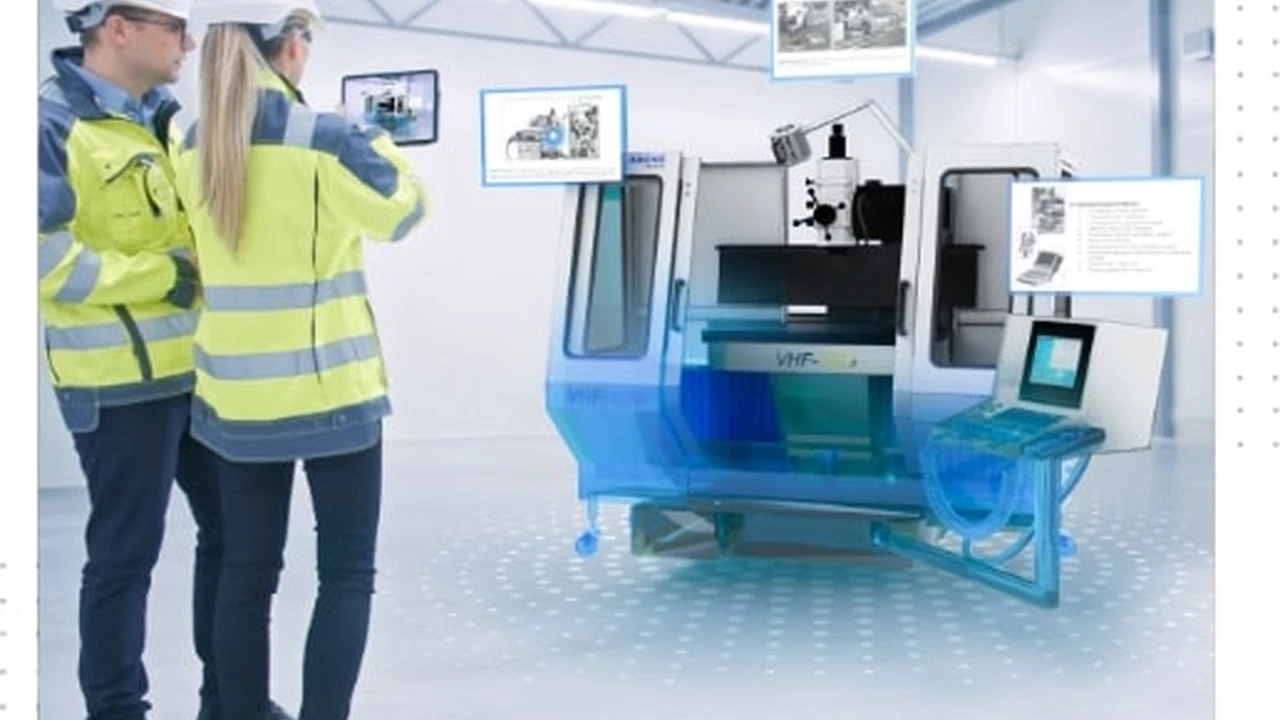
Think of AR as adding digital layers to your real-world view. It doesn't completely immerse you in a new environment; instead, it enhances what you're already seeing. A great example is Pokémon Go, where digital creatures appear in your real surroundings through your phone's camera. In a training context, AR can overlay instructions onto a piece of machinery, show you how to assemble a complex product step-by-step, or even provide real-time data about a patient during medical training. It's about bringing digital information into your physical space, making learning highly contextual and interactive.
Virtual Reality VR Immersing in New Worlds
VR, on the other hand, is all about full immersion. When you put on a VR headset, you're transported to a completely different, simulated environment. This could be anything from a virtual operating room for surgeons to a simulated factory floor for engineers, or even a customer service scenario for new hires. VR blocks out the real world and replaces it with a digital one, offering an unparalleled sense of presence. This makes it incredibly powerful for experiential learning, allowing trainees to practice skills in a safe, controlled, and realistic environment without real-world consequences.
Why AR and VR are Revolutionizing Corporate Training The Benefits
So, why are companies so excited about AR and VR for training? The benefits are pretty compelling, especially when you consider the diverse needs of a global workforce.
Enhanced Engagement and Retention Immersive Learning Experiences
Let's be honest, traditional training can sometimes be a bit dry. Reading manuals or watching endless PowerPoint presentations isn't always the most engaging way to learn. AR and VR change that entirely. By making training interactive, immersive, and often gamified, they significantly boost trainee engagement. When people are actively involved and having fun, they're more likely to retain information and skills. This is crucial for complex tasks where muscle memory and quick decision-making are vital.
Cost Efficiency and Scalability Reducing Training Expenses
While the initial investment in AR/VR hardware and software might seem high, it often leads to significant cost savings in the long run. Think about it: no need for expensive physical prototypes, fewer travel costs for trainers and trainees, and reduced risks of damaging real equipment during practice. Once a VR simulation is built, it can be used repeatedly by countless trainees across different locations, making it incredibly scalable. This is particularly beneficial for companies operating across vast geographical areas like the US and Southeast Asia, where bringing everyone to a central training facility can be a logistical nightmare and a huge expense.
Safe and Risk-Free Practice Environments High Stakes Training
For jobs that involve high-risk scenarios, like operating heavy machinery, performing surgical procedures, or handling hazardous materials, VR offers an invaluable safe space for practice. Trainees can make mistakes, learn from them, and refine their skills without any real-world danger or costly errors. This not only protects employees but also prevents damage to expensive equipment or harm to customers.
Personalized Learning Paths Adaptive Training Modules
AR and VR training can be highly personalized. The systems can track a trainee's progress, identify areas where they struggle, and adapt the training modules accordingly. This means each individual gets the specific practice they need, rather than a one-size-fits-all approach. This adaptive learning ensures that everyone reaches proficiency at their own pace, leading to more effective and efficient training outcomes.
Improved Performance and Productivity Real World Impact
Ultimately, the goal of any training program is to improve performance. By providing realistic, hands-on experience, AR and VR training leads to better-prepared employees who can perform their jobs more effectively and efficiently from day one. This translates directly into increased productivity, fewer errors, and a higher quality of work, which are critical for business success in competitive global markets.
AR and VR in Action Specific Use Cases and Industries
Let's look at some real-world examples of how AR and VR are being deployed across various industries for training.
Manufacturing and Assembly Training Complex Procedures
In manufacturing, AR can overlay digital instructions onto physical components, guiding workers through complex assembly processes. Imagine a new employee assembling an intricate engine; AR glasses could highlight each part, show the correct sequence, and even provide torque specifications. VR can simulate an entire factory floor, allowing trainees to practice operating machinery, troubleshooting issues, and understanding workflow without disrupting actual production. This is a huge win for industries in places like Vietnam or Malaysia, where manufacturing is a key sector.
Healthcare and Medical Training Surgical Simulations
The medical field is a prime candidate for VR training. Surgeons can practice complex operations in a virtual environment, repeating procedures until they achieve mastery. Medical students can explore human anatomy in 3D, far more interactively than with textbooks or even cadavers. AR can assist during actual surgeries by overlaying patient data or anatomical information directly onto the surgeon's view. This technology is invaluable for training healthcare professionals in the US and rapidly developing medical sectors in Southeast Asia.
Retail and Customer Service Training Role Playing Scenarios
For customer-facing roles, VR can create realistic simulations of customer interactions. New retail associates can practice handling difficult customers, processing returns, or upselling products in a safe virtual space. This allows them to develop confidence and refine their communication skills before facing real customers. AR can also be used in-store to provide product information to sales associates in real-time, helping them answer customer queries more effectively.
Logistics and Supply Chain Training Warehouse Operations
In logistics, VR can simulate warehouse layouts, allowing workers to practice picking and packing orders, operating forklifts, or optimizing routes. This helps improve efficiency and safety in busy warehouse environments. AR can guide workers to specific locations in a warehouse, highlighting items to be picked, reducing errors and speeding up the process.
Aerospace and Defense Training Maintenance and Operations
The aerospace and defense sectors have been early adopters. VR is used to train pilots in flight simulators, and AR assists maintenance crews with complex repairs on aircraft, overlaying schematics and instructions directly onto the components. The precision and safety requirements in these industries make AR/VR an ideal training solution.
Key AR and VR Products and Platforms for Training A Comparative Look
Alright, let's get down to some specifics. If you're thinking about implementing AR or VR training, what kind of hardware and software should you be looking at? Here's a comparison of some popular options, their use cases, and general price points.
VR Headsets for Immersive Training
Oculus Quest 3 Meta Quest 3
- Use Case: This is a fantastic all-in-one VR headset, meaning it doesn't need to be tethered to a powerful PC. It's great for a wide range of training scenarios, from soft skills like customer service and leadership training to more technical simulations that don't require ultra-high fidelity graphics. Its ease of use makes it ideal for deployment in various corporate settings, including remote training programs.
- Features: High-resolution display, comfortable design, passthrough video for mixed reality experiences (blending VR and AR elements), and a vast ecosystem of content.
- Pros: Standalone (no PC needed), relatively affordable, good resolution, user-friendly.
- Cons: Not as powerful as PC-tethered VR, battery life can be a limitation for very long sessions.
- Estimated Price: Around $499 - $649 USD, depending on storage capacity.
HTC Vive Pro 2 High Fidelity VR
- Use Case: For training scenarios that demand the absolute highest visual fidelity and precision tracking, such as surgical simulations, complex engineering design reviews, or detailed machinery operation. It requires a powerful gaming PC to run, making it more suitable for dedicated training centers or specific workstations.
- Features: Industry-leading resolution, wide field of view, precise room-scale tracking, and robust build quality.
- Pros: Unmatched visual clarity, excellent tracking, durable.
- Cons: Expensive, requires a high-end PC, tethered (less freedom of movement).
- Estimated Price: Headset alone around $799 USD, full kit with controllers and base stations around $1399 USD. Plus the cost of a powerful PC.
Pico 4 Enterprise Business Focused VR
- Use Case: Designed specifically for enterprise use, the Pico 4 offers a strong balance of performance and cost-effectiveness for corporate training. It's a standalone headset, similar to the Quest, but often comes with enterprise-specific features and support, making it a strong contender for large-scale deployments in businesses. Good for onboarding, safety training, and virtual meeting simulations.
- Features: High-resolution display, lightweight design, good comfort, and often includes enterprise-grade security and device management options.
- Pros: Standalone, competitive pricing for enterprise, good resolution, business-focused features.
- Cons: Content ecosystem might be smaller than Meta's for consumer apps, but growing for enterprise.
- Estimated Price: Around $899 USD for the enterprise version.
AR Devices for Enhanced Real-World Training
Microsoft HoloLens 2 Mixed Reality Powerhouse
- Use Case: The HoloLens 2 is a mixed reality headset, meaning it seamlessly blends digital holograms with your real environment. It's perfect for hands-on training where trainees need to interact with physical objects while receiving digital guidance. Think maintenance and repair, complex assembly, remote assistance, or even architectural visualization. It's a premium device for highly specialized industrial and technical training.
- Features: Advanced optics, comfortable and balanced design, hand tracking, eye tracking, and spatial mapping capabilities.
- Pros: True mixed reality, untethered, robust enterprise features, excellent for collaborative AR.
- Cons: Very expensive, requires custom application development, not designed for full immersion.
- Estimated Price: Around $3,500 USD.
Magic Leap 2 Enterprise AR Solution
- Use Case: Similar to HoloLens, Magic Leap 2 is another high-end AR device aimed at enterprise. It excels in scenarios requiring precise digital content overlay and interaction within a real-world setting. Ideal for design, engineering, healthcare, and manufacturing training where detailed 3D models need to be viewed and manipulated in context.
- Features: High-resolution display, wide field of view, dynamic dimming for better contrast, and a focus on comfort for extended use.
- Pros: Excellent visual quality, comfortable, strong enterprise focus.
- Cons: Expensive, requires custom content, still a niche market.
- Estimated Price: Around $3,299 USD.
AR on Smartphones and Tablets Accessible AR Training
- Use Case: Don't underestimate the power of AR on devices most people already own! Smartphone and tablet AR apps are incredibly accessible and cost-effective for training. They can be used for product demonstrations, interactive manuals, virtual tours, or even simple step-by-step guides for tasks. This is a great entry point for companies looking to experiment with AR without a huge hardware investment.
- Features: Utilizes existing device cameras and screens, leverages ARKit (Apple) and ARCore (Google) for robust AR experiences.
- Pros: Extremely accessible, low hardware cost (uses existing devices), easy to deploy.
- Cons: Less immersive than dedicated AR headsets, limited field of view, can be tiring to hold a device for extended periods.
- Estimated Price: Free to hundreds of dollars for custom app development, uses existing smartphones/tablets.
Training Content Platforms and Software Development Kits SDKs
Beyond the hardware, you'll need software to create and deliver your training experiences. Many companies specialize in this.
Unity and Unreal Engine Game Engines for Training
- Use Case: These are the industry-standard game engines used to create most AR and VR experiences. If you have an in-house development team or work with a specialized vendor, these engines provide the tools to build highly customized and complex simulations. They offer unparalleled flexibility and graphical fidelity.
- Features: Comprehensive development environments, physics engines, rendering pipelines, and support for all major AR/VR platforms.
- Pros: Ultimate flexibility, high-quality graphics, powerful tools.
- Cons: Requires significant development expertise, time-consuming to build content from scratch.
- Estimated Price: Free for personal use, subscription models for enterprise (Unity Pro starts around $2,040/year per seat, Unreal Engine has a royalty model or custom licensing for enterprise).
Ready-Made VR Training Platforms e.g. Strivr, Immerse
- Use Case: For companies that want to deploy VR training quickly without building everything from scratch, platforms like Strivr or Immerse offer off-the-shelf solutions or frameworks for creating training content. They often focus on specific areas like soft skills, safety training, or operational procedures.
- Features: Content libraries, authoring tools, analytics dashboards, and enterprise-grade deployment and management.
- Pros: Faster deployment, less development expertise needed, often include analytics.
- Cons: Less customization than building from scratch, subscription costs.
- Estimated Price: Varies widely based on content, number of users, and features. Typically subscription-based, ranging from thousands to tens of thousands of dollars annually.
Challenges and Considerations for AR VR Training Implementation
While the future looks bright, there are definitely some hurdles to consider when bringing AR and VR into your training programs.
Initial Investment Costs Hardware and Software
As you saw with the product comparisons, the upfront cost for high-end AR/VR hardware and custom content development can be substantial. Companies need to carefully weigh the long-term benefits against this initial outlay. However, as the technology matures, prices are coming down, and more accessible options are emerging.
Content Creation and Expertise Specialized Development
Creating compelling and effective AR/VR training content requires specialized skills. It's not just about filming a video; it involves 3D modeling, programming, instructional design for immersive environments, and often game design principles. Companies might need to hire specialized talent or partner with experienced AR/VR development studios.
Technical Infrastructure and Connectivity Network Requirements
Deploying AR/VR training, especially for large teams or across multiple locations, requires robust technical infrastructure. This includes reliable Wi-Fi, sufficient bandwidth for downloading large files, and potentially dedicated spaces for VR experiences. This is particularly relevant in regions where internet infrastructure might vary.
User Adoption and Comfort Overcoming Resistance
Not everyone is immediately comfortable with AR/VR headsets. Some users might experience motion sickness in VR, or simply find the devices cumbersome. Companies need to consider user comfort, provide proper onboarding, and ensure the training is genuinely beneficial to encourage adoption. Starting with shorter, engaging experiences can help ease trainees into the technology.
Integration with Existing Learning Management Systems LMS
For seamless integration, AR/VR training solutions need to communicate with existing Learning Management Systems (LMS) to track progress, assign modules, and manage user data. Ensuring compatibility and data flow is a critical technical consideration.
The Future Outlook for AR and VR in Corporate Learning
Looking ahead, the trajectory for AR and VR in corporate training is only going up. We're seeing rapid advancements in hardware, making devices lighter, more powerful, and more affordable. Software tools are becoming more intuitive, allowing for easier content creation. The rise of 5G networks will also significantly enhance the capabilities of AR/VR, enabling more complex, cloud-rendered experiences with less latency.
Expect to see more widespread adoption across all industries, from retail to heavy industry. The blend of AR and VR, often referred to as Mixed Reality (MR), will become increasingly common, offering the best of both worlds: immersive simulations combined with real-world interaction. Personalized, adaptive learning paths powered by AI and delivered through AR/VR will become the norm, tailoring training precisely to individual needs and accelerating skill development.
For businesses in the US and especially in the rapidly growing economies of Southeast Asia, embracing AR and VR for training isn't just about staying current; it's about gaining a significant competitive edge. It's about building a highly skilled, adaptable, and engaged workforce ready to tackle the challenges and opportunities of tomorrow.
So, whether you're a small business owner in Singapore looking to upskill your team or a large corporation in the US aiming to revolutionize your onboarding process, AR and VR offer powerful, innovative solutions that are worth exploring. The future of learning is here, and it's incredibly immersive.
:max_bytes(150000):strip_icc()/277019-baked-pork-chops-with-cream-of-mushroom-soup-DDMFS-beauty-4x3-BG-7505-5762b731cf30447d9cbbbbbf387beafa.jpg)