Charity Scams How to Donate Safely
Learn to distinguish legitimate charities from fraudulent ones and donate safely.
Learn to distinguish legitimate charities from fraudulent ones and donate safely. It's a sad truth that even in moments of generosity, scammers are lurking, ready to exploit your good intentions. Charity scams are particularly insidious because they prey on our desire to help others, often during times of crisis or natural disaster. But don't let that deter you from giving! With a little knowledge and some smart practices, you can ensure your donations go to genuine causes.
Charity Scams How to Donate Safely
Hey there, generous soul! You're looking to make a difference, and that's awesome. But before you open your wallet, let's have a chat about charity scams. These aren't just annoying; they can be heartbreaking, diverting much-needed funds from real causes and leaving you feeling betrayed. We're going to dive deep into how to spot these fakes, compare legitimate organizations with shady ones, and arm you with the knowledge to donate safely and effectively. Think of this as your ultimate guide to being a smart, safe giver.
Understanding Charity Scams What Are They and Why Do They Happen
First off, what exactly is a charity scam? Simply put, it's when someone pretends to be a legitimate charity to solicit donations, but the money either goes directly into their pockets or to a cause that isn't what they claim. These scams often spike during major events like natural disasters, global health crises, or even holidays when people are feeling more charitable. Why do they happen? Because it's easy to tug at heartstrings, and unfortunately, some people are willing to exploit that for personal gain. They leverage urgency, emotion, and sometimes even well-known names to trick you.
Spotting the Red Flags Key Indicators of Fraudulent Charities
Alright, let's get down to brass tacks. How do you tell a real charity from a fake? There are some pretty clear red flags to watch out for. Think of these as your scam radar:
- High-Pressure Tactics: Legitimate charities want your support, but they won't pressure you into donating immediately. Scammers often create a sense of urgency, demanding immediate payment or threatening negative consequences if you don't give right away.
- Vague Information: A real charity will be transparent about its mission, how it uses donations, and its financial statements. Scammers will be vague, unable to provide specific details about their programs, where your money goes, or how they operate.
- Unusual Payment Methods: Be extremely wary if a charity asks for donations via gift cards, wire transfers, cryptocurrency, or cash sent through the mail. These methods are nearly impossible to trace, making them a favorite for scammers. Legitimate charities typically accept checks, credit cards, or secure online payment platforms.
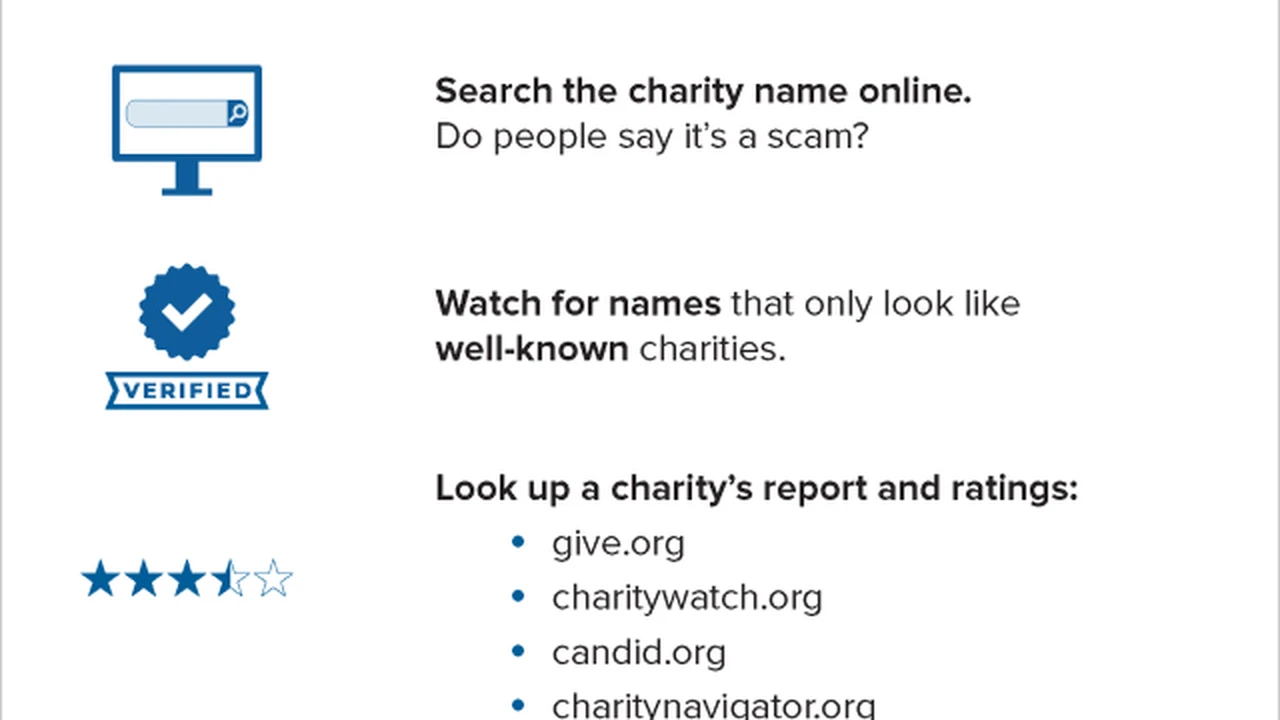
- Sound-Alike Names: Scammers often use names that are very similar to well-known, reputable charities. They might change a single word or add an extra initial to confuse you. Always double-check the exact name.
- Thank You Gifts or Prizes: While some charities offer small tokens of appreciation, be suspicious if you're promised a large prize or a significant gift in exchange for a donation. This is a common tactic to get you to pay an upfront fee that you'll never get back.
- Lack of Official Documentation: A legitimate charity should be registered with the appropriate government bodies. If they can't provide a tax ID number or proof of registration, that's a huge red flag.
- Unsolicited Contact: While charities do outreach, be cautious of unsolicited emails, phone calls, or social media messages, especially if they seem too good to be true or demand immediate action.
- Poorly Designed Websites or Materials: While not always a definitive sign, many scam websites or printed materials might have typos, grammatical errors, or a generally unprofessional appearance.
Verifying Legitimacy Essential Tools and Resources for Donors
So, you've got a charity in mind, but you want to make sure it's the real deal. Excellent! Here are some fantastic resources and steps you can take to verify their legitimacy:
Charity Watchdog Sites Top 3 Platforms for Due Diligence
These independent organizations evaluate charities based on their financial health, accountability, and transparency. They are your best friends in safe giving.
-
Charity Navigator: This is arguably the most well-known and comprehensive charity evaluator in the US. They rate thousands of charities on a 4-star system, focusing on financial health and accountability & transparency. You can search by name, cause, or location. They provide detailed breakdowns of how much money goes to programs versus administrative costs and fundraising. Their website is user-friendly and offers a wealth of information. For example, if you're looking at a charity, Charity Navigator will show you their overall score, their financial performance metrics (like program expenses percentage, administrative expenses percentage, fundraising efficiency), and their accountability and transparency metrics (like independent audits, board diversity, and whistleblower policies). They also provide a 'Donor Advisory' section for charities with specific concerns. This is a must-use tool for any serious donor.
- Use Case: You received a solicitation from 'Helping Hands for Animals.' You can go to Charity Navigator, type in the name, and see if they are listed, what their rating is, and how they spend their money. If they're not listed, or have a low rating, that's a warning sign.
- Pricing: Free to use for donors.
-
GuideStar (now Candid): GuideStar provides a vast database of information on non-profit organizations. While they don't give a simple star rating like Charity Navigator, they offer detailed profiles, including IRS Form 990s (the annual financial reports for non-profits), mission statements, programs, and leadership information. You can see their revenue, expenses, and assets. GuideStar is excellent for a deeper dive into a charity's operations and financial specifics. They have different 'Seals of Transparency' (Bronze, Silver, Gold, Platinum) which charities can earn by providing more information about their operations and impact. This is particularly useful if you want to understand the nitty-gritty of a charity's finances and programs.
- Use Case: You want to understand the specific programs and financial details of a local community foundation. GuideStar allows you to access their Form 990s and see exactly where their funding comes from and how it's allocated.
- Pricing: Basic access is free; premium features and detailed reports require a subscription.
-
BBB Wise Giving Alliance: The Better Business Bureau's Wise Giving Alliance evaluates charities against 20 standards of charity accountability. These standards cover governance, finances, fundraising, and public information. They provide reports that state whether a charity meets each of these standards. This is a great resource for a quick check on a charity's ethical practices and transparency. They focus on ensuring that charities are transparent, honest, and effective in their operations. Their reports are easy to understand and highlight any areas where a charity might fall short of their standards.
- Use Case: You're considering donating to a new environmental group. The BBB Wise Giving Alliance can quickly tell you if they meet key accountability standards, giving you peace of mind.
- Pricing: Free to use for donors.
Government Resources and Official Registries for Charity Verification
Beyond the watchdog sites, government bodies also play a crucial role in regulating charities. These resources are particularly important for verifying a charity's legal status.
-
IRS Tax Exempt Organization Search (US): In the United States, legitimate charities are typically 501(c)(3) non-profit organizations, meaning donations are tax-deductible. The IRS provides a tool to search for tax-exempt organizations. If a charity claims to be tax-exempt but isn't listed here, it's a major red flag. You can search by organization name or Employer Identification Number (EIN). This is the definitive source for confirming a charity's tax-exempt status.
- Use Case: A charity calls you asking for a donation and promises it's tax-deductible. You can use the IRS tool to confirm their 501(c)(3) status before giving.
- Pricing: Free.
-
State Charity Regulators (US): Many US states also have their own charity registration requirements and databases. For example, the Attorney General's office in your state might have a charity search tool. Checking both federal and state registrations provides a comprehensive picture. This is especially useful for smaller, local charities that might not be extensively reviewed by national watchdog sites.
- Use Case: You want to donate to a small, local food bank. Checking your state's charity regulator website can confirm their local registration and compliance.
- Pricing: Free.
-
ACNC Charity Register (Australia): For our friends in Australia, the Australian Charities and Not-for-profits Commission (ACNC) maintains a public register of all registered charities. This is your go-to for verifying Australian charities.
- Use Case: You're in Australia and want to donate to a bushfire relief fund. The ACNC register will confirm if the organization is a legitimate, registered charity.
- Pricing: Free.
-
Charity Commission for England and Wales (UK): Similarly, in the UK, the Charity Commission maintains a public register of charities. This is the official source for verifying charities operating in England and Wales.
- Use Case: You're in the UK and want to support a local animal shelter. The Charity Commission's register will confirm their official status.
- Pricing: Free.
Other Verification Methods Researching Charity Claims and Impact
-
Official Websites and Social Media: Always visit the charity's official website. Look for clear mission statements, program details, financial reports, and contact information. Check their social media presence – legitimate charities usually have active, professional profiles. Be wary of generic or newly created social media pages.
- Use Case: A charity reaches out via email. Instead of clicking links in the email, independently navigate to their official website to verify the information and donation methods.
-
News Articles and Independent Reviews: Do a quick online search for the charity's name along with terms like 'scam,' 'review,' or 'complaints.' See what independent news sources or reputable blogs are saying about them. A lack of any online presence or only very recent, generic mentions can be suspicious.
- Use Case: You hear about a new charity doing great work. A quick Google search can reveal news coverage, testimonials, or any potential controversies.
-
Direct Contact: If you're still unsure, contact the charity directly using the phone number or email address listed on their official website (not one provided in a suspicious solicitation). Ask specific questions about their programs, finances, and how your donation will be used.
- Use Case: You have specific questions about a charity's impact in a particular region. Calling them directly can provide clarity.
Secure Donation Methods Protecting Your Financial Information
Once you've verified a charity, the next step is to ensure your donation is made securely. How you pay matters a lot!
Best Practices for Online Donations Secure Payment Gateways and Websites
-
Always Use the Official Website: Never click on links in suspicious emails or social media posts. Always type the charity's official website address directly into your browser. Look for 'https://' at the beginning of the URL and a padlock icon in the address bar, indicating a secure connection.
-
Credit Card is King: When donating online, using a credit card is generally the safest option. Credit card companies offer fraud protection, making it easier to dispute unauthorized charges. Debit cards offer less protection.
-
Secure Payment Processors: Legitimate charities use well-known, secure payment processors like PayPal, Stripe, or their own secure donation forms. Be wary of requests to use less common or untraceable methods.
-
Avoid Public Wi-Fi: When making online donations, avoid using public Wi-Fi networks, which are often unsecured and vulnerable to eavesdropping. Use a secure home network or your mobile data.
Safe Offline Donation Options Checks and Direct Mail
-
Checks are Safer than Cash: If donating by mail, send a check made out directly to the charity, not an individual. Checks provide a paper trail. Never send cash through the mail.
-
Verify Mailing Address: Double-check the mailing address on the charity's official website before sending anything. Scammers might provide a fake address.
-
In-Person Donations: If donating in person, ensure you are at an official event or location of the charity. Ask for official identification from collectors and look for official branding.
Payment Methods to Avoid Red Flags for Scammers
-
Gift Cards: No legitimate charity will ask you to donate via gift cards. This is a classic scammer tactic because gift cards are untraceable once redeemed.
-
Wire Transfers: Similar to gift cards, wire transfers are very difficult to reverse once sent, making them a favorite for fraudsters.
-
Cryptocurrency: While some very tech-savvy, legitimate charities might accept cryptocurrency, it's still a high-risk payment method for donations due to its irreversible nature and the anonymity it can provide. Be extremely cautious if asked to donate this way, and only do so if you have thoroughly verified the charity through multiple sources.
-
Cash (especially by mail): Cash is untraceable and easily stolen. Avoid sending cash through the mail or giving large sums of cash to unknown solicitors.
Common Charity Scam Scenarios Real-World Examples and Prevention
Scammers are creative, but their tactics often fall into predictable patterns. Knowing these can help you stay one step ahead.
Disaster Relief Scams Exploiting Crises for Personal Gain
When natural disasters strike, our immediate instinct is to help. Scammers know this and quickly set up fake charities or crowdfunding campaigns. They might use images of the disaster, create urgent pleas, and even mimic the names of real relief organizations. Always verify any disaster relief charity through the watchdog sites mentioned above, and consider donating to well-established organizations like the Red Cross, Doctors Without Borders, or reputable local relief efforts that you can verify.
Veterans and First Responders Scams Preying on Patriotism
These scams often target patriotic individuals by claiming to support veterans, police, or firefighters. They might use emotional language and imagery. Many of these organizations have very low percentages of donations actually going to the intended beneficiaries, with most funds being used for fundraising or administrative costs. Always check their financial transparency on Charity Navigator or GuideStar.
Medical and Health Scams False Cures and Research Funds
Scammers might claim to be raising money for medical research for rare diseases or to help individuals with exorbitant medical bills. While individual crowdfunding for medical expenses can be legitimate, be very cautious of broad solicitations for 'medical research' from unknown entities. Verify the organization and its scientific claims.
Impersonation Scams Posing as Well-Known Organizations
This is where scammers use names very similar to established charities (e.g., 'American Cancer Society Fund' instead of 'American Cancer Society'). They might also send emails or make calls pretending to be from a charity you've previously donated to. Always verify the sender's email address, and if in doubt, contact the charity directly using their official contact information.
Protecting Your Personal Information Beyond Your Wallet
Donating safely isn't just about your money; it's also about your personal data. Scammers can use your information for identity theft.
-
Be Mindful of What You Share: Legitimate charities will ask for your name, address, and payment information. They generally don't need your Social Security number, bank account PINs, or other highly sensitive data. If asked for information that seems excessive, be suspicious.
-
Review Privacy Policies: When donating online, take a moment to review the charity's privacy policy. Understand how they collect, use, and share your personal information. Do they sell donor lists? This is something you might want to avoid.
-
Opt-Out of Solicitations: If you're receiving too many calls or emails, most legitimate charities offer an option to opt-out of future solicitations. Scammers, however, will ignore these requests.
-
Monitor Your Accounts: Regularly check your bank and credit card statements for any unauthorized charges, especially after making a donation.
What to Do If You Suspect a Charity Scam Reporting and Recovery
Even with the best precautions, sometimes things go wrong. If you suspect you've encountered a charity scam or, worse, fallen victim to one, here's what to do:
-
Report to the Federal Trade Commission (FTC) (US): The FTC is the primary agency for reporting fraud in the US. You can file a report online at reportfraud.ftc.gov. This helps them track scams and warn others.
-
Contact Your State Attorney General (US): Your state's Attorney General's office often has a consumer protection division that handles charity fraud. They can investigate and take action against fraudulent organizations within your state.
-
Report to the IRS (US): If the scam involves a fake tax-exempt organization, you can report it to the IRS. They have specific procedures for dealing with fraudulent charities.
-
Notify Your Bank or Credit Card Company: If you made a donation via credit card or bank transfer, contact your financial institution immediately to report the fraudulent transaction. They might be able to reverse the charge or offer fraud protection.
-
Report to Local Law Enforcement: For significant losses or if you have specific details about the scammers, consider filing a report with your local police department.
-
Inform Charity Watchdog Groups: Let organizations like Charity Navigator, GuideStar, and the BBB Wise Giving Alliance know about the suspected scam. This helps them update their databases and warn other potential donors.
-
Change Passwords: If you provided any personal information or used a password that might be compromised, change it immediately.
Making a Real Impact Strategic Giving and Effective Philanthropy
Now that you're armed with the knowledge to avoid scams, let's talk about how to make your donations truly count. Strategic giving means choosing charities that align with your values and have a proven track record of effectiveness.
-
Research Impact: Look beyond just financial efficiency. Does the charity actually achieve its stated goals? Many watchdog sites are starting to incorporate impact metrics into their evaluations. Look for charities that clearly articulate their programs and provide evidence of their success.
-
Focus Your Giving: Instead of spreading small donations across many charities, consider focusing your giving on a few organizations that you've thoroughly vetted and deeply believe in. This can sometimes lead to a greater impact.
-
Consider Unrestricted Donations: While it might feel good to earmark your donation for a specific program, unrestricted donations often allow charities the flexibility to use funds where they are most needed, which can be more effective in the long run.
-
Volunteer Your Time: Sometimes, the most valuable donation isn't money. Volunteering your time and skills can be an incredibly impactful way to support a cause you care about, and it gives you firsthand insight into the charity's operations.
-
Stay Informed: Keep up-to-date with news about the causes you support and the charities you donate to. This ongoing engagement helps you ensure your continued support is well-placed.
Donating to charity is a wonderful act of kindness, and it's something we should all feel confident doing. By being vigilant, using the right tools, and understanding the common tactics of scammers, you can protect your generosity and ensure your hard-earned money goes to where it's truly needed. Happy giving, and stay safe out there!
:max_bytes(150000):strip_icc()/277019-baked-pork-chops-with-cream-of-mushroom-soup-DDMFS-beauty-4x3-BG-7505-5762b731cf30447d9cbbbbbf387beafa.jpg)