3 Key Differences Between Goals and Intentions
Explore the 3 main distinctions between setting goals and intentions. Clarify your path to personal growth.
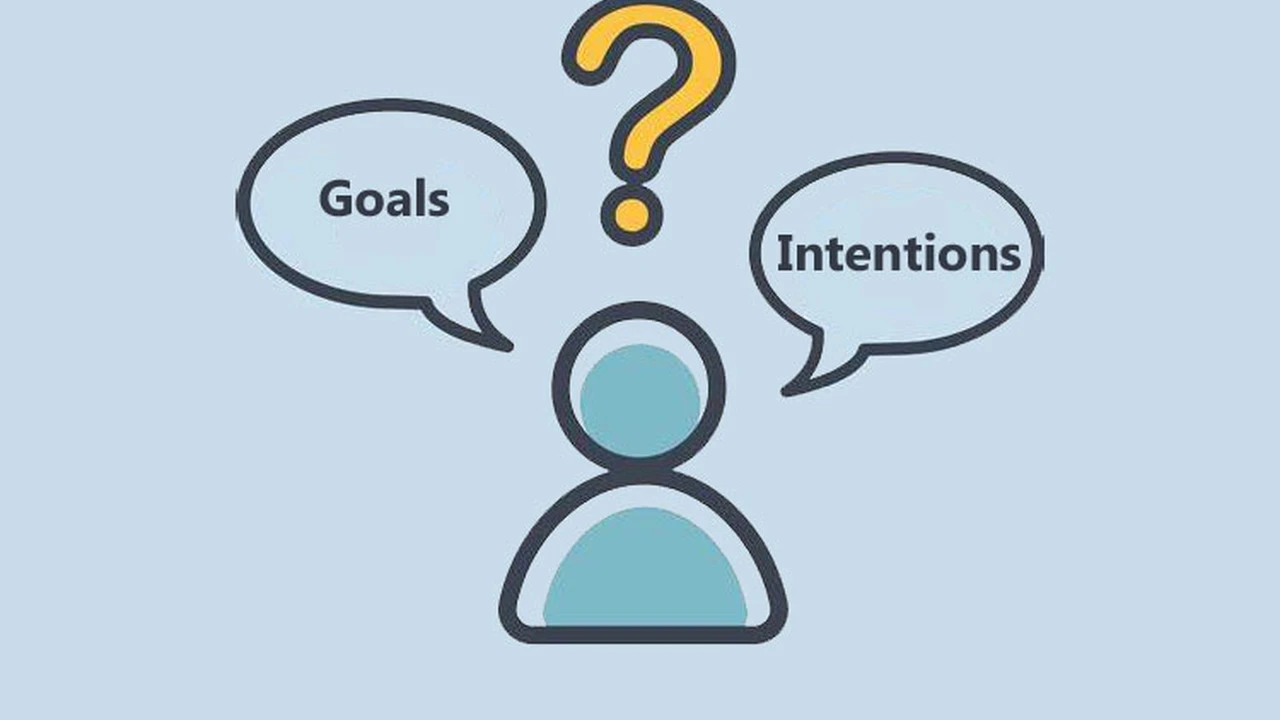
Explore the 3 main distinctions between setting goals and intentions. Clarify your path to personal growth.
Goals Versus Intentions Understanding the Core Differences
Ever felt like you're chasing your tail, setting goal after goal, only to feel unfulfilled or burnt out? Or perhaps you've heard the terms 'goals' and 'intentions' used interchangeably and wondered if there's a real difference. Well, you're in the right place! While both goals and intentions are powerful tools for personal growth and achievement, they operate on different levels and serve distinct purposes. Understanding these nuances can dramatically shift your approach to success and well-being.
Think of it this way: a goal is often about the 'what' – the specific outcome you want to achieve. An intention, on the other hand, is more about the 'how' and the 'why' – the quality of your journey, your mindset, and the energy you bring to your actions. Let's dive deep into the three key differences that will help you harness the power of both for a more balanced and fulfilling life.
Difference 1 Outcome Versus Process The Focus of Your Efforts
The most fundamental distinction between goals and intentions lies in their primary focus. Goals are inherently outcome-oriented. They are specific, measurable, achievable, relevant, and time-bound (SMART) targets that you aim to hit. For example, 'I want to lose 10 pounds in 3 months' is a classic goal. It's about the end result, the destination.
Intentions, however, are process-oriented. They describe the quality of your presence, your attitude, and the way you want to show up in the world or during a specific activity. An intention might be 'I intend to be mindful and present during my meals' or 'I intend to approach challenges with curiosity and resilience.' Notice how these aren't about a specific achievement, but rather about the internal state and approach you adopt.
Let's consider a practical scenario: You want to write a book. Your goal might be 'Finish writing the first draft of my novel by December 31st.' This is a clear, tangible outcome. Alongside this, you could set an intention: 'I intend to write with joy and allow my creativity to flow freely each day.' The goal pushes you towards completion, while the intention shapes the experience of writing, making it more enjoyable and sustainable.
Without an intention, pursuing a goal can feel like a relentless grind. You might achieve the goal, but feel empty or exhausted in the process. Conversely, without a goal, intentions can sometimes lack direction, leading to a feeling of aimlessness. The magic happens when you combine both, allowing your intentions to fuel and guide your goal pursuit.
Difference 2 External Versus Internal The Source of Motivation
Another significant difference lies in where their motivation originates. Goals often draw their power from external validation or tangible rewards. Achieving a goal can bring recognition, a promotion, a certain body image, or financial gain. While there's nothing inherently wrong with external motivators, relying solely on them can make your journey susceptible to external circumstances and comparisons.
Intentions, on the other hand, are deeply internal. They are rooted in your values, your desired state of being, and how you want to feel. When you set an intention, you're not looking for an external reward; you're cultivating an internal experience. For instance, if your goal is to run a marathon, the external motivation might be the medal or the bragging rights. Your intention, however, could be 'I intend to listen to my body and celebrate every step of my training journey,' which is driven by self-care and self-acceptance.
This internal focus makes intentions incredibly resilient. Even if you don't hit your goal exactly as planned, if you've honored your intention, you can still feel a sense of accomplishment and integrity. For example, if your goal was to get a promotion, but it didn't happen this quarter, if your intention was 'I intend to contribute my best work and learn something new every day,' you can still reflect on your efforts with pride and growth, regardless of the external outcome.
This distinction is particularly relevant in today's comparison-driven world. Social media often highlights external achievements (goals), leading to feelings of inadequacy. By focusing on intentions, you shift your attention inward, fostering a sense of self-worth that isn't dependent on what others are doing or achieving.
Difference 3 Future Versus Present The Time Horizon
Goals are inherently future-oriented. They are about something you want to achieve at a later point in time. The entire concept of a goal implies a gap between your current state and a desired future state. 'By next year, I will have saved X amount of money.' 'In five years, I want to be in this position.' This future focus can be motivating, but it can also lead to constantly living for 'someday' and missing the richness of the present moment.
Intentions, conversely, are deeply rooted in the present moment. They are about how you choose to be, act, and feel right now. An intention is a conscious choice you make in the present to guide your actions and mindset. 'Today, I intend to be patient with myself.' 'In this conversation, I intend to listen actively.' This present-moment awareness allows you to bring your best self to whatever you are doing, rather than constantly striving for a future outcome.
Consider meditation. A goal might be 'Meditate for 20 minutes every day for a month.' This is a future target. An intention for a specific meditation session might be 'I intend to observe my thoughts without judgment' or 'I intend to connect with my breath.' The intention shapes the quality of the present experience, making the practice more meaningful, regardless of whether you hit the 20-minute mark perfectly every single day.
This present-moment focus of intentions can reduce anxiety and stress often associated with goal-setting. When you're constantly focused on the future, it's easy to feel overwhelmed by the gap between where you are and where you want to be. Intentions bring you back to the 'now,' empowering you to make conscious choices that align with your values, one moment at a time.
Integrating Goals and Intentions for Holistic Growth Practical Tools and Resources
So, how do you effectively integrate both goals and intentions into your life? It's not about choosing one over the other, but rather understanding their complementary nature. Think of goals as the compass pointing to your destination, and intentions as the map and the quality of your journey.
Tools for Goal Setting and Tracking Your Progress
For effective goal setting, especially for those big, ambitious targets, having the right tools can make a huge difference. These tools help you define, track, and manage your progress, keeping you accountable and motivated.
- Trello: This visual project management tool uses boards, lists, and cards to organize tasks. You can create a board for your major goals, with lists for 'To Do,' 'Doing,' and 'Done.' Each card can represent a sub-goal or a step. It's great for breaking down large goals into manageable chunks.
- Asana: Similar to Trello but often preferred for more complex projects and team collaboration, Asana allows you to set deadlines, assign tasks, and track progress across various projects. It's excellent for professional goals or personal projects with multiple moving parts.
- Notion: A versatile workspace that combines notes, databases, wikis, calendars, and reminders. You can create custom goal-tracking dashboards, linking your goals to daily tasks and resources. Its flexibility makes it suitable for almost any type of goal.
- Habitica: If you're looking to gamify your goals, Habitica turns your to-do list into a role-playing game. You earn points, level up your avatar, and get rewards for completing tasks and achieving goals. It's particularly effective for habit-based goals like 'exercise three times a week.'
Resources for Cultivating Intentions and Mindfulness
Cultivating intentions often involves practices that enhance self-awareness, mindfulness, and emotional intelligence. These resources can help you stay connected to your inner compass.
- Headspace App: A popular meditation and mindfulness app that offers guided meditations, sleep stories, and focus exercises. Regular use can help you clarify your intentions, reduce stress, and stay present.
- Calm App: Similar to Headspace, Calm provides guided meditations, sleep programs, and breathing exercises. It's excellent for developing a daily mindfulness practice, which is crucial for setting and honoring intentions.
- Journaling Apps (e.g., Day One, Journey): Digital journaling can be a powerful way to reflect on your intentions, track your emotional state, and gain clarity. Writing down your intentions daily or weekly helps solidify them in your mind.
- Affirmation Apps (e.g., I Am, ThinkUp): These apps provide daily affirmations that can help reinforce your intentions and cultivate a positive mindset. You can often record your own affirmations, making them even more personal and impactful.
Comparative Look at Popular Tools and Their Pricing
Let's compare some of these tools to help you decide which might be best for your needs. Prices are approximate and can vary based on region and current promotions.
| Tool | Primary Use | Key Features | Pricing Model | Typical Cost (USD/month) | Best For |
|---|---|---|---|---|---|
| Trello | Goal Tracking, Project Management | Visual boards, cards, checklists, integrations | Free, Standard, Premium, Enterprise | Free / $5 / $10 / Custom | Visual thinkers, small teams, personal projects |
| Asana | Goal Tracking, Project Management | Task management, timelines, portfolios, reporting | Free, Premium, Business, Enterprise | Free / $10.99 / $24.99 / Custom | Complex projects, team collaboration, professional goals |
| Notion | Goal Tracking, Knowledge Base, Productivity | Customizable databases, notes, wikis, templates | Free, Personal Pro, Team, Enterprise | Free / $4 / $8 / Custom | Highly customizable users, all-in-one workspace |
| Habitica | Habit Building, Goal Gamification | RPG elements, rewards, social features | Free, Optional Subscription | Free / $4.99 (monthly) | Gamified motivation, habit-based goals |
| Headspace | Mindfulness, Intention Setting | Guided meditations, sleep stories, focus music | Free Trial, Subscription | $12.99 (monthly) / $69.99 (annually) | Beginners in meditation, stress reduction, focus |
| Calm | Mindfulness, Intention Setting | Guided meditations, sleep stories, breathing exercises | Free Trial, Subscription | $14.99 (monthly) / $69.99 (annually) | Sleep improvement, anxiety reduction, daily mindfulness |
| Day One | Journaling, Reflection | Rich text, photos, location, weather, sync | Free, Premium | Free / $34.99 (annually) | Personal reflection, tracking intentions, memory keeping |
When choosing a tool, consider your personal style. Are you a visual planner? Trello might be for you. Do you thrive on gamification? Habitica could be a game-changer. For cultivating intentions, a daily meditation or journaling app can be invaluable. Many of these offer free versions or trials, so you can experiment to find what resonates best with you.
The Synergy of Goals and Intentions A Path to Fulfillment
Ultimately, the most effective approach to personal growth and achievement involves a synergistic blend of both goals and intentions. Goals provide the direction and the measurable milestones, giving you something concrete to strive for. They are the 'what' you want to achieve.
Intentions, on the other hand, provide the meaning, the quality, and the internal compass for your journey. They are the 'how' you want to show up and the 'why' behind your actions. When your goals are aligned with your deepest intentions, your pursuit becomes not just about reaching a destination, but about becoming the person you aspire to be along the way.
Imagine building a house. The blueprints and the final structure are your goals. But the intention is to build it with integrity, using quality materials, and creating a space that fosters warmth and connection. Both are essential for a truly successful and satisfying outcome.
So, as you plan your next steps, whether it's a career move, a health transformation, or a personal project, take a moment to consider both. What specific outcome do you want to achieve? And just as importantly, how do you intend to show up during that process? What qualities do you want to embody? By consciously integrating goals and intentions, you're not just setting yourself up for external success, but for profound internal fulfillment and sustainable growth.
:max_bytes(150000):strip_icc()/277019-baked-pork-chops-with-cream-of-mushroom-soup-DDMFS-beauty-4x3-BG-7505-5762b731cf30447d9cbbbbbf387beafa.jpg)