4 Ways to Build Self-Confidence and Self-Esteem
Discover 4 effective ways to build lasting self-confidence and self-esteem. Believe in yourself and your abilities.
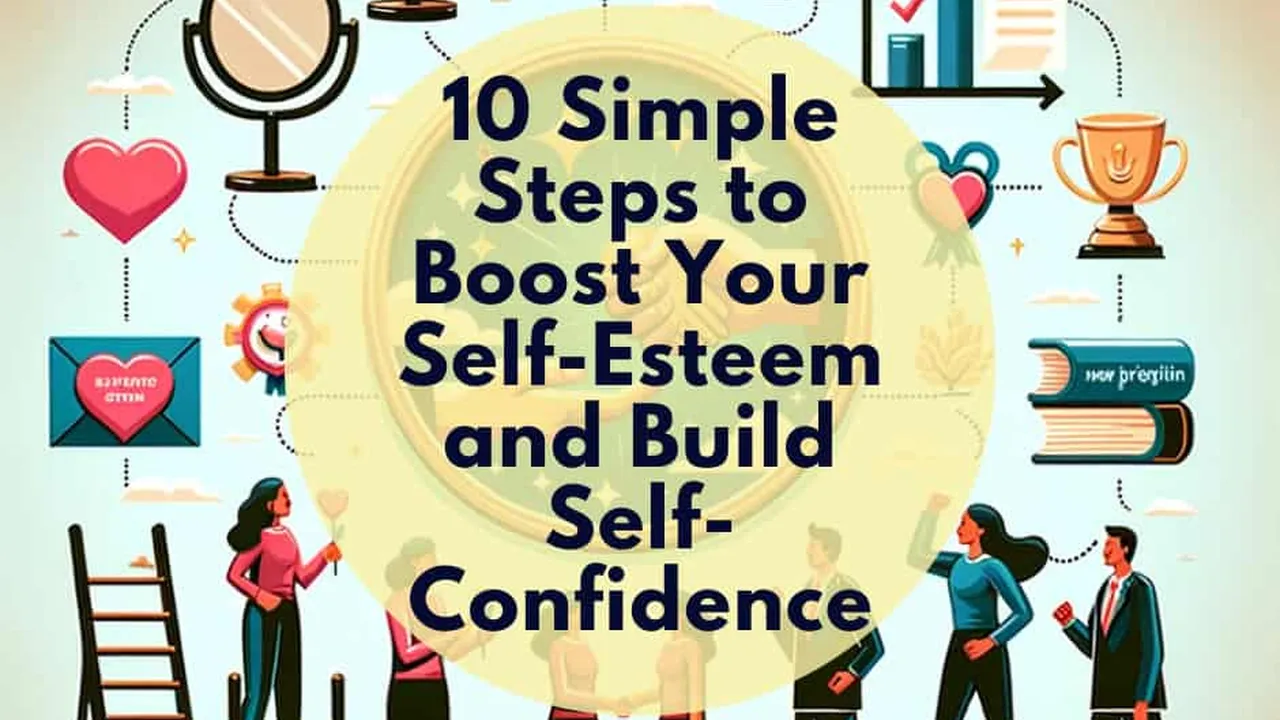
Discover 4 effective ways to build lasting self-confidence and self-esteem. Believe in yourself and your abilities. It's a journey, not a destination, and we're here to walk you through some practical, actionable steps you can start taking today.
4 Ways to Build Self Confidence and Self Esteem
Hey there! Ever feel like you're constantly battling that little voice in your head telling you you're not good enough? Or maybe you shy away from opportunities because you doubt your own capabilities? You're definitely not alone. Building self-confidence and self-esteem is a common challenge, but it's also incredibly rewarding. It's about recognizing your worth, trusting your judgment, and feeling capable of handling life's ups and downs. Let's dive into four powerful ways you can start cultivating that inner strength.
1. Master a Skill or Hobby Boost Your Competence and Confidence
One of the most direct routes to boosting your self-confidence is by becoming proficient at something. When you dedicate time and effort to learning and mastering a skill, you gain a tangible sense of accomplishment. This isn't just about big, impressive skills; it could be anything from learning to bake sourdough bread to coding, playing a musical instrument, or even becoming a pro at a video game. The key is the process of learning, practicing, and seeing your own improvement.
Why Mastering a Skill Works for Self Esteem
- Tangible Progress: You can see and feel your improvement, which provides concrete evidence of your capabilities.
- Sense of Achievement: Successfully completing tasks and reaching milestones in your chosen skill gives you a powerful sense of accomplishment.
- Positive Self-Talk: As you get better, that inner critic starts to quiet down, replaced by a more positive and encouraging internal dialogue.
- External Validation (Optional but Nice): Sometimes, others recognizing your skill can also provide a boost, but the primary benefit comes from your own internal validation.
Practical Steps to Skill Mastery for Confidence Building
So, how do you go about this? First, pick something you're genuinely interested in. Passion fuels persistence. Start small, set achievable goals, and celebrate every little win. Don't be afraid to make mistakes; they're part of the learning process. Consistency is more important than intensity.
Recommended Resources for Skill Development and Self Confidence
There are tons of resources out there to help you on your skill-mastery journey. Here are a few ideas, including some specific products and platforms:
- Online Learning Platforms:
- Coursera: Offers courses from top universities and companies. Great for academic or professional skills. Many courses have free audit options, or you can pay for a certificate. Prices vary widely, from free to several hundred dollars for specializations.
- Udemy: Huge library of courses on almost any topic imaginable, often taught by industry experts. Look for sales, as courses frequently go for $10-$20.
- Skillshare: Focuses on creative skills like illustration, photography, writing, and design. Subscription-based, usually around $15/month or $99/year.
- MasterClass: Learn from world-renowned experts in their fields (e.g., cooking with Gordon Ramsay, writing with Neil Gaiman). Higher price point, typically $180/year for an all-access pass, but the production quality and content are top-notch.
- Language Learning Apps:
- Duolingo: Free, gamified approach to learning languages. Great for beginners and building daily habits.
- Babbel: More structured lessons, focusing on conversational skills. Subscription-based, around $10-$15/month.
- Pimsleur: Audio-based method, excellent for developing speaking and listening skills. More expensive, often $150+ for a full level, but highly effective for many.
- Creative Hobbies:
- Art Supplies: A simple sketchpad and pencil set (e.g., Faber-Castell Pitt Artist Pens, around $20 for a set) can get you started with drawing. For painting, a basic watercolor set (like Winsor & Newton Cotman Water Colour Sketchers' Pocket Box, around $25) is fantastic.
- Musical Instruments: A beginner acoustic guitar (e.g., Yamaha FG800, around $200) or a digital piano (e.g., Casio CDP-S160, around $400) can open up a world of musical exploration. Combine with online tutorials (YouTube is a goldmine!) or apps like Simply Piano (subscription, around $15/month).
The comparison here isn't about which platform is 'best' overall, but which aligns with the skill you want to develop and your learning style. For instance, if you're into creative arts, Skillshare might be a better fit than Coursera. If you're serious about a professional skill, Coursera or Udemy might be more appropriate. The key is to choose a resource that makes learning accessible and enjoyable for you.
2. Practice Self Compassion and Positive Self Talk Cultivate Inner Kindness
This might sound a bit fluffy, but it's incredibly powerful. We're often our own harshest critics. Think about how you talk to a friend who's struggling. You'd likely offer kindness, understanding, and encouragement, right? Now, imagine offering that same compassion to yourself. Self-compassion involves treating yourself with the same kindness and understanding you would offer a good friend. Positive self-talk is the internal dialogue that supports this.
The Impact of Self Compassion on Self Esteem
- Reduces Self-Criticism: Less harsh judgment means less emotional distress and a healthier self-image.
- Increases Resilience: When you're kind to yourself during tough times, you're better equipped to bounce back.
- Promotes Growth: Instead of dwelling on failures, self-compassion allows you to learn from them without getting stuck in shame.
- Fosters Authenticity: You're more likely to be your true self when you accept your imperfections.
How to Practice Self Compassion and Positive Self Talk for Confidence
Start by noticing your inner dialogue. When you make a mistake or face a setback, what's the first thing you say to yourself? If it's negative, consciously reframe it. Instead of 'I'm so stupid for doing that,' try 'That didn't go as planned, but I can learn from it.' Use 'I' statements like 'I am capable,' 'I am worthy,' 'I am doing my best.'
Tools and Techniques for Cultivating Inner Kindness and Self Esteem
- Mindfulness Meditation:
- Headspace: A popular app offering guided meditations, including specific courses on self-esteem and self-compassion. Subscription is around $12.99/month or $69.99/year.
- Calm: Similar to Headspace, with meditations, sleep stories, and masterclasses. Also subscription-based, around $14.99/month or $69.99/year.
- Insight Timer: Offers a vast library of free guided meditations from various teachers, including many focused on self-compassion. Premium features available for a subscription.
- Journaling:
- Gratitude Journal: Simply write down 3-5 things you're grateful for each day. This shifts your focus to positive aspects of your life. Any notebook works, but a dedicated journal like the Five Minute Journal (around $25) provides prompts.
- Self-Compassion Journaling: When you're feeling down, write a letter to yourself as if you were writing to a dear friend. Offer comfort, understanding, and encouragement.
- Affirmation Cards/Apps:
- ThinkUp App: Allows you to record your own affirmations and listen to them daily. Free with in-app purchases for more features.
- Affirmation Cards: Physical decks like The Self-Care Card Deck (around $15) can provide daily prompts for positive self-talk.
When comparing these, Headspace and Calm are great for structured, guided meditation journeys, while Insight Timer offers more variety and free content. Journaling is a low-cost, highly personal way to process thoughts and cultivate gratitude. Affirmation tools are excellent for reinforcing positive beliefs daily. Choose what resonates most with you and commit to a consistent practice.
3. Set and Achieve Small Goals Build Momentum and Competence
Big goals can be intimidating. When you lack confidence, the idea of tackling something huge can feel overwhelming and lead to procrastination or giving up. The trick is to break down those big aspirations into tiny, manageable steps. Each time you achieve one of these small goals, you get a little hit of dopamine, a sense of accomplishment, and concrete proof that you are capable. This builds momentum and gradually expands your belief in your abilities.
Why Small Goals Are Big for Self Confidence and Self Esteem
- Manageable Steps: Less intimidating, making it easier to start and stick with.
- Frequent Wins: Regular successes reinforce your capability and motivate you to continue.
- Reduces Overwhelm: Breaking down tasks makes them feel less daunting.
- Builds Habit: Consistently achieving small goals helps build a habit of success.
How to Set Achievable Goals for Confidence Building
Think about something you want to achieve, then break it down into the smallest possible steps. For example, if your big goal is to 'write a book,' a small goal might be 'write 100 words today' or 'outline chapter one.' If it's 'get fit,' a small goal could be 'walk for 15 minutes' or 'do 10 push-ups.' The key is to make them so easy you almost can't say no.
Recommended Tools for Goal Setting and Tracking for Self Esteem
- Productivity Apps:
- Todoist: Excellent for creating task lists, setting deadlines, and organizing projects. Free version is robust, premium is around $4/month. Great for breaking down larger goals into actionable steps.
- Trello: A visual project management tool that uses boards, lists, and cards. Fantastic for seeing your progress on a larger project. Free for basic use, business class around $10/user/month.
- Habitica: A gamified habit-building app where you earn rewards for completing tasks and lose health for missing them. Free with optional in-app purchases. Makes achieving small goals fun.
- Planners and Notebooks:
- Passion Planner: A popular planner designed to help you break down big goals into monthly, weekly, and daily actions. Various sizes, around $30-$35.
- Bullet Journal: A flexible analog system for organizing tasks, notes, and goals. All you need is a dotted notebook (e.g., Leuchtturm1917 A5 Dotted Notebook, around $20) and a pen. Highly customizable.
- Time Management Techniques:
- Pomodoro Technique: Use a timer (any kitchen timer or app like Focus To-Do, free with premium options) to work in focused 25-minute intervals, followed by short breaks. Helps tackle tasks without feeling overwhelmed.
For digital natives, Todoist and Trello offer powerful ways to manage tasks and visualize progress. Habitica adds a fun, gamified element. If you prefer analog, a Passion Planner or Bullet Journal provides a tactile experience for planning and tracking. The Pomodoro Technique is a universal method that can be applied with any of these tools to ensure focused work on your small goals. The best choice depends on your personal preference for digital vs. analog and how much structure you need.
4. Embrace Your Strengths and Celebrate Your Uniqueness Build on What You Do Well
It's so easy to get caught up in comparing ourselves to others or focusing on our perceived flaws. But a huge part of building self-confidence and self-esteem comes from recognizing and embracing your unique strengths. What are you good at? What do people compliment you on? What comes easily to you that others struggle with? These are your superpowers!
The Power of Strengths Based Thinking for Self Esteem
- Authenticity: When you lean into your strengths, you're being more authentically yourself.
- Increased Effectiveness: You're naturally more effective and successful when you operate from a place of strength.
- Positive Self-Image: Focusing on what you do well shifts your internal narrative from self-criticism to self-appreciation.
- Resilience: Knowing your strengths helps you navigate challenges, as you can leverage them to overcome obstacles.
How to Identify and Leverage Your Strengths for Confidence
Take some time to reflect. Make a list of your accomplishments, big and small. Ask trusted friends or family members what they see as your strengths. Consider what activities make you feel energized and engaged – these often align with your natural talents. Once you've identified them, look for ways to use these strengths more often in your daily life, whether at work, in hobbies, or in your relationships.
Assessments and Resources for Discovering Your Strengths and Uniqueness
- Strength Assessment Tools:
- CliftonStrengths (formerly StrengthsFinder): A highly respected assessment that identifies your top 5 talent themes. The book 'StrengthsFinder 2.0' (around $20) often includes an access code for the assessment. It provides detailed reports and action items.
- VIA Character Strengths Survey: A free, scientifically validated assessment that identifies your top character strengths (e.g., kindness, creativity, perseverance). Available online at the VIA Institute on Character website.
- Journaling Prompts for Self-Reflection:
- 'What activities make me lose track of time?'
- 'When do I feel most alive and engaged?'
- 'What problems do I naturally enjoy solving?'
- 'What compliments do I receive most often?'
- 'If I could teach someone one thing, what would it be?'
Any notebook or digital note-taking app (like Evernote or Notion, both with free tiers) can be used for this.
- Books on Self-Acceptance and Uniqueness:
- 'The Gifts of Imperfection' by Brené Brown: Explores the power of vulnerability, courage, and self-acceptance. Around $15 for paperback.
- 'Daring Greatly' by Brené Brown: Builds on her work, focusing on how vulnerability can transform the way we live, love, parent, and lead. Around $16 for paperback.
- 'Quiet: The Power of Introverts in a World That Can't Stop Talking' by Susan Cain: If you identify as an introvert, this book can be incredibly validating and help you appreciate your unique strengths. Around $17 for paperback.
CliftonStrengths and VIA Character Strengths are excellent for a structured approach to identifying your innate talents. CliftonStrengths is more career-focused, while VIA is broader character-based. Journaling is a free and flexible way to explore your strengths through self-reflection. The recommended books offer profound insights into self-acceptance and embracing your unique qualities, providing a philosophical foundation for building self-esteem. Choose the assessment or resource that feels most aligned with your current needs for self-discovery.
Building self-confidence and self-esteem is an ongoing process, but by consistently applying these four strategies – mastering skills, practicing self-compassion, setting small goals, and embracing your strengths – you'll gradually cultivate a stronger, more resilient, and more authentic sense of self. You've got this!
:max_bytes(150000):strip_icc()/277019-baked-pork-chops-with-cream-of-mushroom-soup-DDMFS-beauty-4x3-BG-7505-5762b731cf30447d9cbbbbbf387beafa.jpg)