5 Signs of a Toxic Relationship and How to Respond
Recognize 5 key signs of a toxic relationship and learn practical steps to recover. Prioritize your health and happiness.
5 Signs of a Toxic Relationship and How to Respond
Recognize 5 key signs of a toxic relationship and learn practical steps to recover. Prioritize your health and happiness. Hey there! Ever felt like a relationship, whether it's with a partner, a friend, or even a family member, is just draining the life out of you? You're not alone. Toxic relationships are unfortunately quite common, and they can sneak up on you, slowly eroding your self-esteem and overall well-being. But here's the good news: recognizing the signs is the first, and arguably most crucial, step towards reclaiming your peace and happiness. We're going to dive deep into five undeniable red flags that scream 'toxic,' and then we'll chat about some real, actionable steps you can take to respond effectively. No fancy jargon, just straight talk to help you navigate these tricky waters.
Understanding Toxic Relationship Dynamics What Makes a Relationship Toxic
Before we jump into the signs, let's get on the same page about what a 'toxic relationship' actually means. It's not just about occasional disagreements or rough patches – every relationship has those. A toxic relationship is characterized by behaviors that are consistently harmful, emotionally damaging, and detrimental to your mental and physical health. It's a pattern of interaction that leaves you feeling worse about yourself, drained, anxious, or unhappy more often than not. These relationships often involve an imbalance of power, a lack of respect, and a constant feeling of walking on eggshells. They can manifest in various forms, from romantic partnerships to friendships, family ties, or even professional connections. The key is the consistent negative impact on your well-being.
Sign 1 Constant Criticism and Belittling Your Self Worth
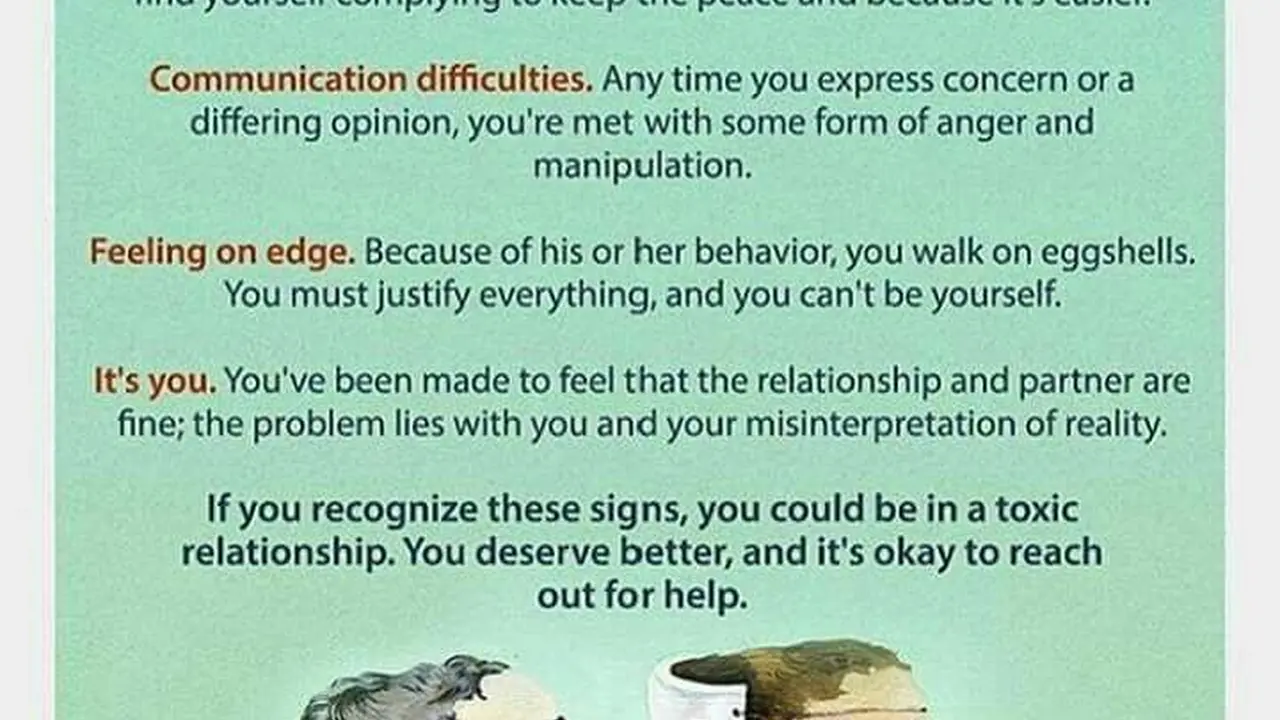
One of the most insidious signs of a toxic relationship is a relentless stream of criticism and belittling. This isn't constructive feedback; it's a constant chipping away at your self-esteem. It might start subtly, with backhanded compliments or sarcastic remarks, but it often escalates. You might hear things like, 'You're so sensitive,' 'Why can't you ever do anything right?' or 'No one else would put up with you.' The person might criticize your appearance, your intelligence, your choices, or even your dreams. They might do it publicly or privately, but the effect is the same: you start to doubt yourself, feel inadequate, and believe you're not good enough. This constant negativity can make you feel like you're always falling short, leading to anxiety and a diminished sense of self-worth. You might even find yourself apologizing for things you haven't done wrong, just to keep the peace.
Sign 2 Lack of Support and Emotional Neglect Your Needs Ignored
In a healthy relationship, there's a mutual exchange of support, encouragement, and empathy. In a toxic one, this is often conspicuously absent. You might find that your partner, friend, or family member is rarely there for you when you need them most. When you share your successes, they might downplay them or make them about themselves. When you're struggling, they might dismiss your feelings, tell you to 'get over it,' or even blame you for your problems. Emotional neglect can manifest as a complete disinterest in your life, your feelings, or your aspirations. You might feel like you're constantly giving, but receiving very little in return. This imbalance leaves you feeling isolated, unheard, and emotionally starved. It's like trying to fill a bottomless pit with your own emotional energy, leaving you utterly depleted.
Sign 3 Manipulation and Control Your Autonomy Undermined
Manipulation and control are hallmarks of toxic relationships. This can take many forms, from subtle guilt-tripping to overt demands. The toxic person might try to control your decisions, your friendships, your finances, or even how you spend your time. They might use emotional blackmail, threats, or passive-aggressive tactics to get their way. Gaslighting is a particularly damaging form of manipulation where they make you doubt your own perceptions and sanity, saying things like, 'That never happened,' or 'You're imagining things.' This constant undermining of your autonomy leaves you feeling powerless, confused, and trapped. You might find yourself constantly second-guessing your own judgment and losing your sense of self. They might isolate you from your support system, making you more dependent on them.
Sign 4 Constant Drama and Conflict Your Peace Disturbed
Does it feel like your relationship is a never-ending rollercoaster of drama and conflict? This is a significant red flag. Toxic relationships often thrive on chaos. The toxic person might intentionally create arguments, blow small issues out of proportion, or constantly stir the pot. They might enjoy being the center of attention, even if it's negative attention. You might find yourself constantly trying to de-escalate situations, apologize for things you didn't do, or walk on eggshells to avoid another confrontation. This constant state of tension and conflict is incredibly draining and can lead to chronic stress, anxiety, and even physical health problems. Your peace of mind is constantly disturbed, and you might feel like you're always bracing for the next argument.
Sign 5 Disrespect for Boundaries Your Personal Space Invaded
Healthy relationships are built on mutual respect, and a crucial part of that is respecting each other's boundaries. In a toxic relationship, boundaries are often ignored, violated, or even mocked. This could mean anything from constantly showing up unannounced, reading your private messages, making decisions for you without your input, or pressuring you into doing things you're uncomfortable with. When you try to assert a boundary, the toxic person might react with anger, guilt-tripping, or by dismissing your feelings. This constant invasion of your personal space and disregard for your limits leaves you feeling disrespected, violated, and powerless. You might feel like you don't have any control over your own life, and your sense of personal safety and autonomy is compromised.
Responding to Toxic Relationships Practical Steps for Recovery
Okay, so you've recognized some of these signs. What now? It's a tough spot to be in, but remember, you have the power to change your situation. Here are some practical steps you can take:
Step 1 Acknowledge and Validate Your Feelings Your Emotional Health Matters
First things first: acknowledge what you're feeling. It's okay to feel hurt, angry, confused, or sad. Don't minimize your experiences or try to rationalize the other person's behavior. Your feelings are valid. Journaling can be incredibly helpful here. Write down what's happening, how it makes you feel, and what you wish would change. This helps you process your emotions and gain clarity. Talking to a trusted friend, family member, or therapist can also provide much-needed validation and perspective. Remember, you're not overreacting; your feelings are a legitimate response to an unhealthy situation.
Step 2 Set Clear Boundaries Your Personal Limits Defined
This is a big one. Even if the other person has historically ignored your boundaries, it's crucial to re-establish them. Be clear, concise, and firm. For example, 'I will not discuss this when you're yelling,' or 'I need space when I'm upset, and I'll talk to you later.' Be prepared for resistance, as toxic individuals often react negatively when their control is challenged. You might need to repeat your boundaries consistently. It's not about controlling their behavior, but about controlling your response and protecting your own well-being. If they continue to violate your boundaries, you might need to move to the next step.
Step 3 Seek Support Your Network of Strength
You don't have to go through this alone. Reach out to your support system: friends, family, or a therapist. A therapist specializing in toxic relationships or narcissistic abuse can provide invaluable guidance and strategies. They can help you understand the dynamics at play, develop coping mechanisms, and build your self-esteem. Sometimes, just having someone listen and believe you can make a world of difference. Consider joining support groups, either online or in person, where you can connect with others who have similar experiences. Knowing you're not isolated can be incredibly empowering.
Step 4 Limit Contact or End the Relationship Your Well-being First
This is often the hardest step, but sometimes, it's the only way to truly heal. If the toxic person is unwilling to change, or if their behavior continues to be damaging despite your efforts to set boundaries, limiting contact or ending the relationship might be necessary. This could mean going 'no contact' (completely cutting off communication) or 'low contact' (minimizing interactions to essential ones). If it's a romantic relationship, ending it might be the healthiest choice. If it's a family member you can't completely cut off, establish strict boundaries and limit your exposure. This decision is about prioritizing your mental and emotional health above all else. It's not selfish; it's self-preservation.
Step 5 Focus on Self-Care and Healing Your Journey to Recovery
After navigating a toxic relationship, you'll likely have some healing to do. Prioritize self-care activities that replenish your energy and boost your self-esteem. This could include mindfulness, exercise, hobbies, spending time in nature, or pursuing new interests. Reconnect with old friends, build new healthy relationships, and rediscover who you are outside of the toxic dynamic. Therapy can be particularly helpful during this phase to process trauma, rebuild self-worth, and develop healthier relationship patterns for the future. Remember, healing is a journey, not a destination, and it's okay to take your time.
Tools and Resources for Navigating Toxic Relationships Your Support System
Navigating toxic relationships can be incredibly challenging, and sometimes you need a little extra help. Here are some resources and tools that can support you on your journey to recovery and healthier relationships. We'll look at some apps, books, and even some physical products that can aid in your self-care and boundary-setting efforts.
Recommended Apps for Emotional Support and Boundary Setting Digital Allies
In today's digital age, there are some fantastic apps that can serve as your digital allies in managing emotional well-being and even helping you articulate boundaries. These aren't replacements for professional help, but they can be great supplementary tools.
1. Calm App Mindfulness and Stress Reduction
Description: Calm is one of the leading apps for meditation and sleep. It offers guided meditations, sleep stories, breathing programs, and relaxing music. While not directly about toxic relationships, it's invaluable for managing the stress, anxiety, and emotional turmoil that often come with them. It helps you ground yourself and regain a sense of inner peace.
Usage Scenario: Use it daily for 10-15 minutes to reduce stress, improve sleep, and practice mindfulness. This can help you stay centered when dealing with difficult interactions or processing emotions after a confrontation.
Pricing: Free basic version; Premium subscription is typically around $69.99/year or $399.99 for a lifetime subscription. Often offers free trials.
Comparison: Similar to Headspace, but many users find Calm's interface and content slightly more soothing and focused on relaxation. Headspace often has a more playful, animated approach.
2. MoodKit Cognitive Behavioral Therapy CBT Tools
Description: MoodKit is an app developed by clinical psychologists that provides mood-enhancing activities and tools based on Cognitive Behavioral Therapy (CBT) principles. It helps you identify and challenge negative thought patterns, which are often exacerbated by toxic relationships.
Usage Scenario: Use it to track your mood, engage in mood-lifting activities, and practice thought challenging. This can be particularly useful for rebuilding self-esteem and combating the negative self-talk that toxic relationships often instill.
Pricing: One-time purchase, typically around $4.99 (iOS only).
Comparison: More focused on active CBT exercises than general mood tracking apps. It's a practical tool for applying therapeutic techniques yourself, whereas many other mood apps are primarily for logging.
3. Nuna Relationship Tracker and Journal Relationship Insights
Description: Nuna (or similar relationship journaling apps) allows you to track interactions, feelings, and patterns within your relationships. While it can be used for healthy relationships, it's particularly insightful for toxic ones as it helps you objectively see patterns of behavior, boundary violations, and emotional impact over time.
Usage Scenario: After an interaction, log how you felt, what was said, and if any boundaries were crossed. Over time, this data can provide concrete evidence of toxic patterns, which can be empowering when you're doubting your perceptions or considering next steps.
Pricing: Varies, some are free with in-app purchases, others are subscription-based (e.g., $5-10/month).
Comparison: Unlike general journaling apps, Nuna is specifically designed for relationship dynamics, offering prompts and analytics tailored to interpersonal interactions. This makes it more targeted for identifying toxic patterns.
Recommended Books for Understanding and Healing Your Knowledge Base
Knowledge is power, especially when dealing with complex emotional dynamics. These books offer insights, strategies, and validation for those navigating toxic relationships.
1. 'Boundaries: When to Say Yes How to Say No To Take Control of Your Life' by Henry Cloud and John Townsend
Description: This classic book provides a comprehensive guide to understanding, establishing, and maintaining healthy boundaries in all areas of your life. It's rooted in psychological and spiritual principles, offering practical advice on how to protect your emotional and mental space.
Usage Scenario: Read this book to gain a deep understanding of what healthy boundaries look like and how to implement them effectively. It's essential for anyone struggling with a toxic person who consistently oversteps limits.
Pricing: Paperback around $12-15; Kindle edition around $9-12.
Comparison: While many books touch on boundaries, this one is considered a foundational text, offering a holistic and in-depth approach rather than just surface-level tips. It's particularly strong on the 'why' behind boundaries.
2. 'The Gift of Fear: Survival Signals That Protect Us From Violence' by Gavin de Becker
Description: While not exclusively about toxic relationships, this book teaches you to trust your intuition and recognize warning signs of dangerous or manipulative behavior. It empowers you to listen to your gut feelings, which are often suppressed in toxic dynamics.
Usage Scenario: Read this to sharpen your instincts and learn to identify subtle cues of manipulation or control. It can be incredibly empowering for those who have been gaslighted or made to doubt their perceptions.
Pricing: Paperback around $10-14; Kindle edition around $8-11.
Comparison: Unique in its focus on intuition and pre-incident indicators of violence or harm. It's less about relationship repair and more about self-protection and trusting your inner alarm system, which is crucial when dealing with highly manipulative individuals.
3. 'Psychopath Free: Recovering from Emotionally Abusive Relationships With Narcissists Sociopaths and Other Toxic People' by Jackson MacKenzie
Description: This book is specifically tailored for survivors of relationships with individuals exhibiting narcissistic or psychopathic traits. It offers validation, explains the tactics used by these personalities, and provides a clear path to recovery and healing.
Usage Scenario: If you suspect you've been in a relationship with a narcissist or sociopath, this book can be a lifeline. It helps you understand what happened, why it happened, and how to move forward without blaming yourself.
Pricing: Paperback around $14-18; Kindle edition around $10-13.
Comparison: Highly specialized for abuse from personality disorders, offering a level of detail and understanding that general relationship books might lack. It's a powerful resource for those dealing with the most extreme forms of toxic behavior.
Physical Products for Self-Care and Stress Relief Tangible Comforts
Beyond digital tools and books, sometimes you need tangible items to help you relax, de-stress, and create a sanctuary for yourself, especially when you're dealing with the aftermath of a toxic relationship.
1. Weighted Blanket Anxiety and Sleep Aid
Description: A weighted blanket provides deep pressure stimulation, which can have a calming effect on the nervous system. It's like a comforting hug, helping to reduce anxiety and improve sleep quality, both of which are often disrupted by toxic relationships.
Usage Scenario: Use it when you're feeling anxious, overwhelmed, or having trouble sleeping. It can create a sense of security and comfort, helping you relax and feel safe in your own space.
Pricing: Varies widely based on size and weight, typically $40-150. Brands like Bearaby (premium, breathable) or YnM (budget-friendly, popular on Amazon).
Comparison: Offers a unique sensory experience compared to regular blankets. Bearaby is known for its knitted design and breathability, while YnM is a more traditional quilted weighted blanket, often more affordable.
2. Essential Oil Diffuser and Calming Oils Aromatherapy for Peace
Description: An essential oil diffuser disperses aromatic essential oils into the air, creating a calming and soothing atmosphere. Oils like lavender, chamomile, and frankincense are known for their stress-reducing properties.
Usage Scenario: Use it in your bedroom or living space to create a peaceful environment. Diffuse calming oils during meditation, before sleep, or when you need to de-stress after a difficult day. It helps to create a personal sanctuary.
Pricing: Diffusers range from $20-60; essential oils typically $10-30 per bottle. Brands like doTERRA or Young Living (premium, often multi-level marketing) or ArtNaturals (more affordable, widely available).
Comparison: Diffusers vary in design, mist output, and run time. Premium essential oil brands often claim higher purity, but many affordable brands offer good quality for aromatherapy purposes. ArtNaturals offers good value for money.
3. Noise-Canceling Headphones Your Personal Quiet Zone
Description: High-quality noise-canceling headphones can create a personal bubble of quiet, allowing you to escape overwhelming environments or simply find peace when you need it most. This is especially useful if you're still living with or frequently exposed to a toxic person.
Usage Scenario: Wear them to block out noise when you need to focus, relax, or simply create a sense of personal space. They can be invaluable for listening to calming music, guided meditations, or audiobooks without interruption.
Pricing: Ranges from $100-400+. Brands like Sony WH-1000XM5 (top-tier, excellent noise cancellation) or Bose QuietComfort 45 (another premium option) or Anker Soundcore Life Q30 (budget-friendly, good performance).
Comparison: Sony and Bose are generally considered the gold standard for noise cancellation, offering superior comfort and sound quality. Anker provides excellent value for its price point, making good noise cancellation more accessible.
Remember, recognizing the signs of a toxic relationship is a huge step towards healing. It takes courage to confront these dynamics, but your well-being is absolutely worth it. By understanding the patterns, setting boundaries, seeking support, and prioritizing self-care, you can reclaim your peace and build a life filled with healthy, supportive connections. You deserve relationships that uplift you, not tear you down. Take these steps, lean on your support system, and trust your journey towards a happier, healthier you.
:max_bytes(150000):strip_icc()/277019-baked-pork-chops-with-cream-of-mushroom-soup-DDMFS-beauty-4x3-BG-7505-5762b731cf30447d9cbbbbbf387beafa.jpg)