Anonymization vs Pseudonymization Key Differences
Distinguish between data anonymization and pseudonymization and their roles in privacy protection. Understand the nuances of these techniques for safeguarding personal information in the US and Southeast Asia.
Distinguish between data anonymization and pseudonymization and their roles in privacy protection. Understand the nuances of these techniques for safeguarding personal information in the US and Southeast Asia.
Anonymization vs Pseudonymization Key Differences
Hey there, digital citizen! Ever wondered how companies handle your data while trying to keep it private? It's a tricky balance, especially with all the buzz around data breaches and privacy regulations like GDPR and CCPA. Two terms you'll often hear in this conversation are 'anonymization' and 'pseudonymization.' They sound similar, right? Like two sides of the same coin. But trust me, they're fundamentally different, and understanding these differences is super important for anyone concerned about their digital privacy, whether you're in the bustling tech hubs of the US or the rapidly digitizing markets of Southeast Asia.
Think of it this way: both are about protecting your identity, but they do it with varying degrees of commitment. One is like completely erasing your tracks, making it impossible to find you. The other is more like putting on a really good disguise – you're still there, but it's much harder to recognize you without a special key. Let's dive deep into what makes these two data protection techniques tick, their pros and cons, and when you'd typically see them in action.
Understanding Anonymization What It Means for Your Data Privacy
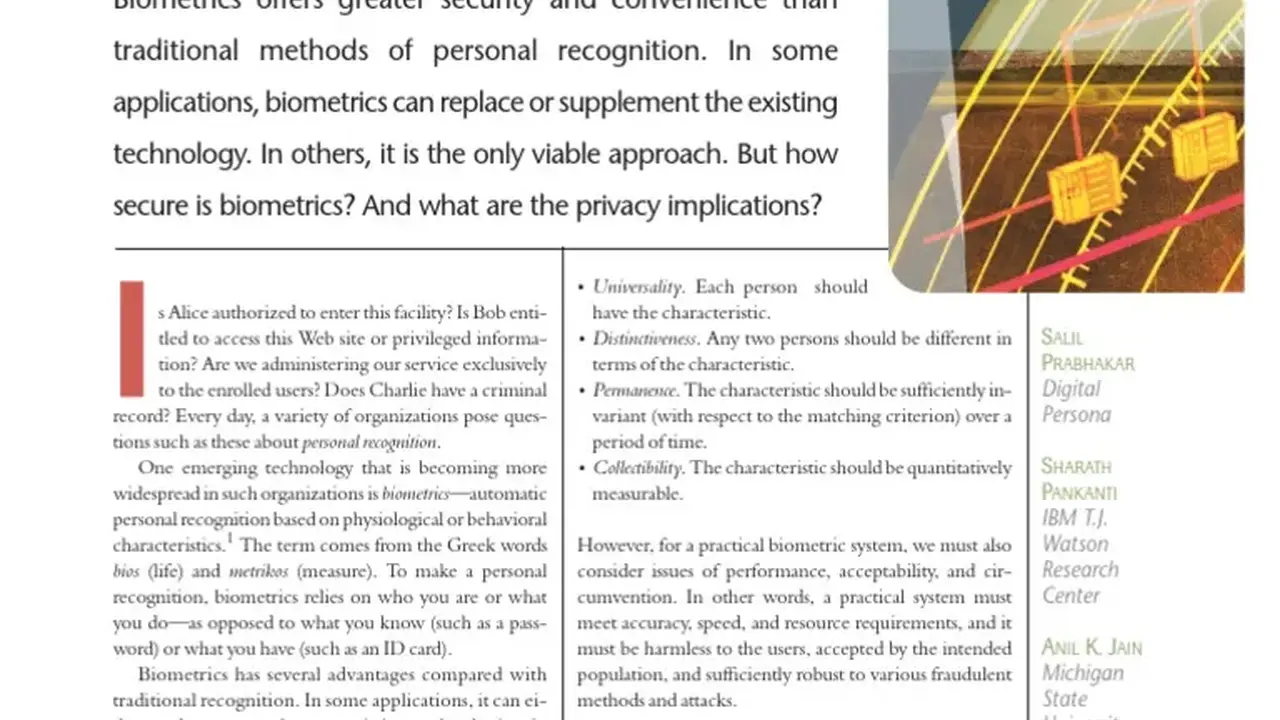
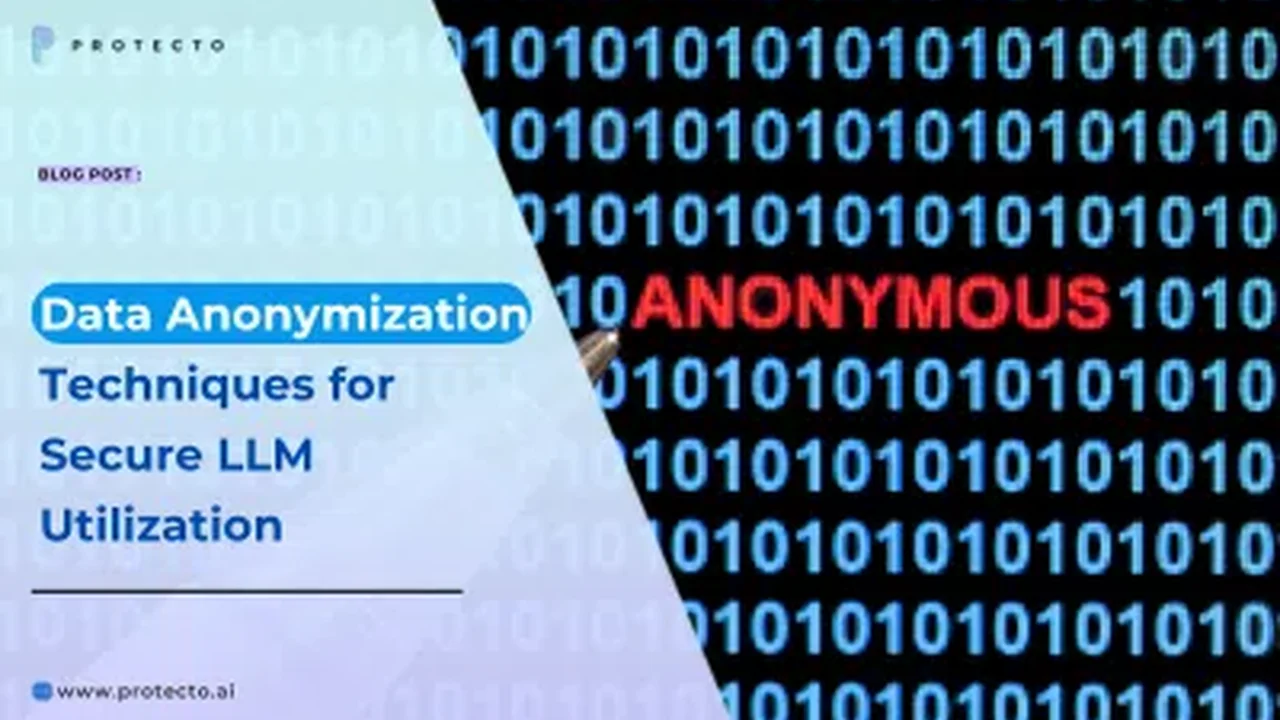
So, what exactly is anonymization? In simple terms, anonymization is the process of removing or modifying personal data so that the individual can no longer be identified, either directly or indirectly. Once data is truly anonymized, it's no longer considered 'personal data' under most privacy regulations. This is a big deal because it means the strict rules around handling personal data often don't apply to anonymized datasets.
How Anonymization Works Techniques and Examples
Achieving true anonymization isn't as simple as just deleting a name. It often involves a combination of techniques:
- Generalization: This involves replacing specific values with broader categories. For example, instead of 'Age: 32,' you might see 'Age Range: 30-35.' Or 'City: New York' becomes 'Region: Northeast US.'
- Suppression: Simply deleting certain data points that could lead to identification. This could be removing names, addresses, or even unique identifiers like IP addresses.
- Swapping/Permutation: Rearranging data within a dataset so that individual records are no longer linked to their original attributes. Imagine shuffling a deck of cards – you still have all the cards, but their order is randomized.
- Adding Noise: Introducing slight inaccuracies or random data into the dataset to obscure individual data points without significantly altering the overall statistical properties. This makes it harder to pinpoint exact values.
- K-anonymity: This is a more formal approach. A dataset is k-anonymous if, for any combination of quasi-identifiers (attributes that, when combined, could identify an individual, like age, gender, and zip code), there are at least 'k' individuals sharing those same values. So, if k=5, you can't identify a unique person from a group smaller than 5.
- Differential Privacy: This is a more advanced and mathematically rigorous technique. It involves adding carefully calibrated noise to data queries or the data itself, ensuring that the presence or absence of any single individual's data in the dataset does not significantly affect the outcome of an analysis. This provides strong privacy guarantees, even against adversaries with significant background knowledge.
Let's say a hospital wants to share patient data with researchers to study disease patterns without revealing individual patient identities. They might anonymize the data by removing names, exact birth dates (replacing them with birth year or age range), and specific addresses (replacing them with broader geographical regions). If done correctly, it becomes impossible to link any record back to a specific patient.
Benefits and Challenges of Anonymization for Data Protection
Benefits:
- Strongest Privacy Protection: When truly achieved, anonymization offers the highest level of privacy protection because the data is no longer personal.
- Reduced Regulatory Burden: Anonymized data often falls outside the scope of strict data protection laws, making it easier for organizations to share and use for research, analytics, and public datasets.
- Enables Data Sharing: It allows valuable insights to be extracted from data without compromising individual privacy, fostering innovation and research.
Challenges:
- Irreversibility: True anonymization is meant to be irreversible. If there's any way to re-identify an individual, it's not truly anonymized.
- Loss of Utility: The more you anonymize data, the more detail you lose. This can sometimes reduce the usefulness or accuracy of the data for certain analyses. For example, knowing an exact age is more useful than an age range for some studies.
- Risk of Re-identification: This is the biggest challenge. Even seemingly anonymized data can sometimes be re-identified, especially when combined with other publicly available datasets. Researchers have famously shown how seemingly anonymous datasets can be linked back to individuals using external information. This is why techniques like differential privacy are gaining traction.
- Complexity: Implementing robust anonymization techniques, especially advanced ones like differential privacy, requires significant expertise and computational resources.
Exploring Pseudonymization A Flexible Approach to Data Security
Now, let's talk about pseudonymization. This is where things get a bit more nuanced. Pseudonymization is the processing of personal data in such a manner that the personal data can no longer be attributed to a specific data subject without the use of additional information, provided that such additional information is kept separately and is subject to technical and organizational measures to ensure that the personal data are not attributed to an identified or identifiable natural person.
In simpler terms, pseudonymization replaces direct identifiers (like your name or email) with artificial identifiers, or 'pseudonyms.' It's like giving you a secret code name. The original data still exists, and it's still possible to link the pseudonym back to your real identity, but only if you have access to that 'additional information' – the key that unlocks the code. This key is kept separate and secure.
How Pseudonymization Works Techniques and Practical Applications
Pseudonymization typically involves:
- Tokenization: Replacing sensitive data elements with a non-sensitive equivalent, or 'token.' For example, a credit card number might be replaced with a randomly generated token. The original card number is stored securely in a separate vault, and only the token is used for transactions.
- Hashing: Transforming data into a fixed-size string of characters (a hash value). While hashing is generally one-way (you can't easily reverse a hash to get the original data), it's not considered true pseudonymization on its own if the original data is easily guessable or if rainbow tables can be used. However, salted hashing (adding a random string before hashing) can make it more robust.
- Encryption: Encrypting direct identifiers. The encrypted data can only be decrypted with the correct key. This is a strong form of pseudonymization, as the original data is still present but unreadable without authorization.
- Substitution: Replacing direct identifiers with unique, generated identifiers. For instance, 'John Doe' becomes 'User_XYZ123.' The mapping between 'John Doe' and 'User_XYZ123' is stored separately and securely.
Imagine an online retailer wants to analyze customer purchasing habits without directly knowing who bought what. They could pseudonymize the customer data by replacing names and email addresses with unique customer IDs. The purchasing data would then be linked to these IDs. If they ever needed to contact a specific customer about an order, they could use the separate, secure key to link the ID back to the original customer information.
Benefits and Challenges of Pseudonymization for Data Management
Benefits:
- Enhanced Privacy with Utility: It strikes a good balance between protecting privacy and retaining data utility. You can still perform detailed analysis on the pseudonymized data.
- Reversibility (Controlled): Unlike anonymization, pseudonymized data can be re-identified if necessary, but only under strict controls and with access to the separate key. This is crucial for certain business processes, like customer support or fraud detection.
- Regulatory Compliance: Many privacy regulations, including GDPR, recognize pseudonymization as a valuable security measure that can reduce the risks associated with data processing.
- Flexibility: It allows organizations to use data for various purposes while maintaining a layer of privacy protection.
Challenges:
- Not True Anonymity: It's important to remember that pseudonymized data is still personal data. If the key is compromised, or if enough external information is available, re-identification is possible.
- Key Management: The security of the 'key' that links pseudonyms back to real identities is paramount. If this key is lost or stolen, the entire system is compromised.
- Implementation Complexity: Setting up and maintaining a robust pseudonymization system, especially with secure key management, can be complex.
- Ongoing Risk Assessment: Organizations need to continuously assess the risk of re-identification, as new data sources or analytical techniques could potentially compromise pseudonymized datasets.
Anonymization vs Pseudonymization Key Differences and When to Use Each
Let's break down the core distinctions to make it super clear:
| Feature | Anonymization | Pseudonymization |
|---|---|---|
| Reversibility | Irreversible (ideally) | Reversible (with the 'key') |
| Data Type | No longer 'personal data' | Still 'personal data' |
| Privacy Level | Highest (if successful) | Enhanced, but not absolute |
| Utility | Potentially reduced | High utility retained |
| Regulatory Status | Often outside strict data protection laws | Subject to data protection laws, but with reduced risk |
| Primary Goal | Prevent identification entirely | Reduce identifiability, enable controlled use |
When to use Anonymization:
- When you need to share data publicly or with third parties where there's absolutely no need to identify individuals (e.g., public health statistics, research datasets for general trends).
- When the risk of re-identification must be minimized to near zero.
- When the loss of some data utility is acceptable for the sake of ultimate privacy.
When to use Pseudonymization:
- When you need to perform analytics, testing, or development on data that still needs to be linked back to individuals for specific purposes (e.g., customer service, personalized recommendations, fraud detection).
- When you want to reduce the risk of a data breach exposing direct identifiers, but still need the ability to re-identify under controlled circumstances.
- For internal processing where different departments have different access levels to the 'key.'
- To comply with regulations that specifically mention pseudonymization as a recommended security measure (like GDPR).
Tools and Products for Implementing Anonymization and Pseudonymization
Implementing these techniques isn't just theoretical; there are actual tools and services that help organizations achieve them. Here are a few examples, keeping in mind that the landscape is constantly evolving:
Data Anonymization Tools and Platforms
For robust anonymization, especially differential privacy, specialized platforms are emerging. These are often complex and geared towards enterprises or research institutions.
-
Google's Differential Privacy Library:
- Description: Google has open-sourced a C++ library for differential privacy, making it accessible for developers to build privacy-preserving data analysis into their applications. It's designed for scenarios where you want to query sensitive data and get aggregate results without revealing individual data points.
- Use Case: Ideal for large organizations or researchers who need to perform statistical analysis on vast datasets (e.g., user behavior, health records) while providing strong mathematical guarantees against re-identification.
- Comparison: More of a developer tool/library than an off-the-shelf product. Requires significant technical expertise to implement correctly. Offers very strong privacy guarantees.
- Pricing: Open-source, so the software itself is free. Implementation costs would be internal development time and expertise.
-
Privitar:
- Description: Privitar offers a data privacy platform that helps organizations apply various privacy-enhancing techniques, including anonymization and pseudonymization, to their data. They focus on maintaining data utility while ensuring compliance.
- Use Case: Enterprises dealing with large volumes of sensitive data (e.g., financial services, healthcare, telecommunications) that need to share data internally or externally for analytics, machine learning, or collaboration while adhering to strict privacy regulations.
- Comparison: A comprehensive enterprise-grade platform. Offers a range of techniques beyond just differential privacy, often with a more user-friendly interface for data stewards.
- Pricing: Enterprise-level pricing, typically subscription-based and customized based on data volume, features, and deployment. Expect significant investment.
-
ARX Data Anonymization Tool:
- Description: ARX is an open-source data anonymization tool that supports various privacy models, including k-anonymity, l-diversity, and t-closeness. It's a research-oriented tool but can be used for practical applications.
- Use Case: Researchers, academics, and organizations with strong technical capabilities looking for a flexible, open-source solution to experiment with and apply different anonymization techniques to structured datasets.
- Comparison: More hands-on and less 'productized' than Privitar. Offers deep control over anonymization parameters but requires a good understanding of the underlying privacy models.
- Pricing: Free (open-source).
Data Pseudonymization Tools and Services
Pseudonymization is more commonly integrated into data management platforms or offered as specialized services, especially for tokenization.
-
Securiti.ai:
- Description: Securiti.ai offers a comprehensive data privacy and security platform that includes capabilities for data pseudonymization, tokenization, and data masking. They focus on automating privacy operations and ensuring compliance across various data environments.
- Use Case: Organizations needing to automate data discovery, classification, and the application of privacy controls like pseudonymization across their entire data estate, from cloud to on-premise. Useful for compliance with GDPR, CCPA, and other regulations.
- Comparison: A broader platform covering many aspects of data privacy management, with pseudonymization as a key feature. More focused on operationalizing privacy at scale.
- Pricing: Enterprise-level pricing, typically subscription-based and tailored to organizational needs.
-
Protegrity:
- Description: Protegrity specializes in data protection, offering advanced tokenization, encryption, and data masking solutions. Their platform allows organizations to protect sensitive data at rest, in motion, and in use, making it suitable for pseudonymization.
- Use Case: Companies in highly regulated industries (e.g., finance, healthcare, retail) that need to protect sensitive customer data, payment information, or health records while still enabling analytics and business processes.
- Comparison: Strong focus on data protection primitives like tokenization and encryption, which are core to robust pseudonymization. Often integrates deeply with existing data infrastructure.
- Pricing: Enterprise-level pricing, typically based on data volume, number of users, and specific modules deployed.
-
VGS (Very Good Security):
- Description: VGS offers a 'Zero Data' approach, acting as a secure vault for sensitive data. Instead of handling sensitive data directly, companies send it to VGS, which then returns a non-sensitive alias (token). This token can be used in place of the original data, effectively pseudonymizing it.
- Use Case: Startups and enterprises that want to offload the burden of handling sensitive data (like credit card numbers, PII) to a specialized third party, thereby reducing their compliance scope (e.g., PCI DSS). Ideal for payment processing, fintech, and any application dealing with PII.
- Comparison: A unique 'vault' model that completely removes sensitive data from the client's environment, replacing it with tokens. Simpler to integrate for specific use cases like payment processing.
- Pricing: Tiered pricing based on data volume, number of requests, and features. They often have a free tier for developers and scale up for enterprise use.
When choosing a tool, consider your specific needs: Do you need irreversible anonymization for public datasets, or flexible pseudonymization for internal analytics? What's your budget? What's your technical expertise? And crucially, what are the regulatory requirements in your target markets, be it the US or various Southeast Asian nations?
Regulatory Landscape Anonymization and Pseudonymization in GDPR CCPA and Beyond
The distinction between anonymization and pseudonymization isn't just academic; it has significant legal and regulatory implications. Data protection laws around the world treat these two concepts differently.
GDPR and Its Stance on Data Protection Techniques
The General Data Protection Regulation (GDPR) in Europe is a prime example. It explicitly defines both terms:
- Anonymization: If data is truly anonymized, it falls outside the scope of GDPR because it no longer relates to an 'identifiable natural person.' This means organizations don't have to comply with many of GDPR's strict requirements for anonymized data. However, the bar for 'true anonymization' is very high, and the risk of re-identification must be negligible.
- Pseudonymization: GDPR views pseudonymized data as a security measure. It's still considered 'personal data' and therefore subject to GDPR. However, Article 32 (Security of processing) and Recital 28 encourage pseudonymization as a way to reduce the risks to data subjects. It can also help with compliance in areas like data minimization and data protection by design.
For businesses operating in the US and dealing with European customers, understanding this distinction is critical for compliance.
CCPA and Other US Privacy Laws
In the United States, laws like the California Consumer Privacy Act (CCPA) and its successor, the California Privacy Rights Act (CPRA), also address these concepts, though sometimes with slightly different terminology.
- De-identified Data (CCPA/CPRA): This is the closest equivalent to anonymized data under CCPA/CPRA. Data is 'de-identified' if it cannot reasonably be used to infer information about, or otherwise be linked to, an identified or identifiable consumer, and the business has implemented technical safeguards and business processes to prohibit re-identification. Like GDPR's anonymization, de-identified data often falls outside some of the stricter consumer rights provisions.
- Pseudonymization: While not explicitly defined as 'pseudonymization' in the same way as GDPR, the concept of using identifiers that are not directly linked to an individual, but can be re-linked with additional information, is implicitly covered under various security and data handling provisions. The focus is on reasonable security measures to protect personal information.
Other US sector-specific laws, like HIPAA for healthcare, also have provisions for de-identification to allow for research while protecting patient privacy.
Southeast Asian Data Privacy Regulations
The data privacy landscape in Southeast Asia is diverse and rapidly evolving. Countries like Singapore (PDPA), Malaysia (PDPA), Thailand (PDPA), and Indonesia (PDP Law) have their own regulations, often drawing inspiration from GDPR.
- Singapore's PDPA: While not explicitly defining 'anonymization' and 'pseudonymization' in the same detail as GDPR, the principles of data protection and minimizing identifiable information are central. Organizations are encouraged to implement appropriate security measures, which would include techniques akin to pseudonymization.
- Thailand's PDPA: This law is heavily influenced by GDPR and includes similar concepts. It emphasizes the need for appropriate security measures and risk reduction, where pseudonymization would play a significant role.
- Malaysia's PDPA: Focuses on consent and security. While not using the exact terms, the underlying principles of reducing identifiability and protecting personal data are paramount.
For businesses operating across these regions, a robust data protection strategy often involves a combination of pseudonymization and, where feasible, anonymization, to meet diverse regulatory requirements and demonstrate a commitment to privacy.
The Future of Data Privacy Balancing Utility and Protection
As data becomes the new oil, the tension between extracting valuable insights from data and protecting individual privacy will only grow. Anonymization and pseudonymization are not just technical jargon; they are crucial tools in navigating this complex landscape.
The trend is towards more sophisticated techniques, especially in anonymization, to overcome the re-identification risks. Differential privacy, for instance, is gaining traction because it offers stronger mathematical guarantees of privacy, even when adversaries have significant background knowledge. We're also seeing more focus on 'privacy-enhancing technologies' (PETs) that go beyond these two techniques, including homomorphic encryption (allowing computation on encrypted data) and secure multi-party computation (allowing multiple parties to jointly compute a function over their inputs while keeping those inputs private).
For individuals, understanding these concepts empowers you to ask better questions about how your data is being handled. For businesses, mastering these techniques is not just about compliance; it's about building trust with your customers and fostering responsible innovation. Whether you're a tech giant in Silicon Valley or a burgeoning e-commerce platform in Jakarta, the ability to effectively anonymize or pseudonymize data will be a cornerstone of your data strategy for years to come.
So, next time you hear about a company using 'anonymous' data, remember to ask: how truly anonymous is it? And if they're using 'pseudonymized' data, consider what safeguards are in place to protect that crucial 'key.' Your digital privacy depends on it.
:max_bytes(150000):strip_icc()/277019-baked-pork-chops-with-cream-of-mushroom-soup-DDMFS-beauty-4x3-BG-7505-5762b731cf30447d9cbbbbbf387beafa.jpg)