Consumer Data Rights Beyond GDPR and CCPA
Discover other significant consumer data rights and privacy laws emerging globally. This article explores various international data protection regulations, comparing their scope, impact, and how they empower individuals with greater control over their personal information. We'll look at key differences, enforcement mechanisms, and practical implications for both consumers and businesses operating across borders. Get ready to understand the global landscape of data privacy and how it affects you.
Consumer Data Rights Beyond GDPR and CCPA
Discover other significant consumer data rights and privacy laws emerging globally. This article explores various international data protection regulations, comparing their scope, impact, and how they empower individuals with greater control over their personal information. We'll look at key differences, enforcement mechanisms, and practical implications for both consumers and businesses operating across borders. Get ready to understand the global landscape of data privacy and how it affects you.Hey there! So, you've probably heard a lot about GDPR and CCPA, right? They're like the big shots in the world of data privacy, setting the bar pretty high for how companies handle your personal info. But here's the thing: the digital world is huge, and privacy isn't just a European or Californian concern anymore. More and more countries are stepping up, introducing their own laws to give you, the consumer, more power over your data. It's a pretty exciting time if you care about your digital footprint!
Let's dive into some of these other cool regulations that are making waves globally. We're talking about laws that are shaping how businesses interact with your data, whether you're in Brazil, Thailand, or even Canada. Understanding these isn't just for legal eagles; it's super important for anyone who uses the internet, which, let's be honest, is pretty much everyone!
Understanding Global Data Privacy Laws A Comparative Look
While GDPR (General Data Protection Regulation) from the EU and CCPA (California Consumer Privacy Act) are often cited as benchmarks, they're far from the only players. Many nations have either enacted similar comprehensive laws or are in the process of doing so. These laws often share common principles like transparency, data minimization, and individual rights, but they also have unique twists and turns.
Brazil's LGPD Lei Geral de Proteção de Dados Personais
Brazil's LGPD, which came into full effect in 2020, is heavily inspired by GDPR. It applies to any data processing operation carried out in Brazil or involving data of individuals located in Brazil, regardless of where the data processing company is based. This means if you're a business targeting Brazilian consumers, you better be compliant!
- Key Rights for Consumers: Similar to GDPR, LGPD grants individuals rights such as access to their data, correction of inaccurate data, deletion of data, and the right to object to processing.
- Consent is King: Just like GDPR, explicit consent is a cornerstone of LGPD for processing personal data.
- Data Protection Officer (DPO): Many organizations are required to appoint a DPO, a role crucial for ensuring compliance.
- Enforcement and Fines: The National Data Protection Authority (ANPD) is the enforcement body, and non-compliance can lead to significant fines, up to 2% of a company's revenue in Brazil, capped at 50 million Brazilian Reais per infraction.
Practical Implications: For consumers, this means more control over how Brazilian companies (or companies dealing with Brazilian data) use their information. For businesses, it necessitates a robust data governance framework, clear consent mechanisms, and potentially a DPO.
Canada's PIPEDA Personal Information Protection and Electronic Documents Act
Canada has had PIPEDA since 2000, making it one of the earlier comprehensive privacy laws. It applies to private-sector organizations across Canada that collect, use, or disclose personal information in the course of commercial activities. Some provinces also have their own substantially similar privacy laws.
- Fair Information Principles: PIPEDA is built around 10 fair information principles, including accountability, identifying purposes, consent, limiting collection, limiting use disclosure and retention, accuracy, safeguards, openness, individual access, and challenging compliance.
- Consent: Consent is central, but it can be express or implied, depending on the sensitivity of the information and the reasonable expectations of the individual.
- Breach Notification: Organizations are required to report breaches of security safeguards involving personal information that pose a real risk of significant harm to individuals.
- Enforcement: The Office of the Privacy Commissioner of Canada (OPC) oversees compliance. While the OPC can't issue fines directly, it can make recommendations and take cases to federal court, which can impose penalties.
Practical Implications: If you're a Canadian consumer, PIPEDA gives you rights to access your personal information held by businesses and challenge its accuracy. For businesses, it means being transparent about data practices and having strong security measures in place.
Thailand's PDPA Personal Data Protection Act
Thailand's PDPA, fully enforced in June 2022, is another comprehensive law that draws inspiration from GDPR. It aims to protect personal data and provide individuals with rights regarding their data, while also regulating the collection, use, and disclosure of personal data by organizations.
- Extraterritorial Scope: Similar to GDPR, PDPA applies to organizations outside Thailand if they offer goods or services to data subjects in Thailand or monitor their behavior.
- Data Subject Rights: Individuals have rights to access, rectify, erase, restrict processing, and port their data.
- Consent and Legal Bases: Consent is a primary legal basis for processing, but other bases like contractual necessity or legitimate interest are also recognized.
- Data Protection Officer: Certain organizations are required to appoint a DPO.
- Penalties: Non-compliance can result in administrative fines, criminal penalties (including imprisonment), and civil liabilities.
Practical Implications: For consumers in Thailand, this means enhanced protection and control over their data. For businesses, especially those operating in or targeting the Thai market, it requires a thorough review of data handling practices and compliance with new obligations.
Singapore's PDPA Personal Data Protection Act
Singapore's PDPA, enacted in 2012 and significantly amended in 2020, is a robust framework for data protection. It governs the collection, use, and disclosure of personal data by organizations, aiming to balance the protection of individuals' personal data with organizations' need to collect, use, and disclose data for legitimate purposes.
- Consent-Based Regime: Consent is generally required for the collection, use, or disclosure of personal data, though there are exceptions.
- Data Protection Obligations: Organizations must adhere to various obligations, including accuracy, protection, retention limitation, and transfer limitation.
- Do Not Call (DNC) Registry: A unique feature allowing individuals to opt out of telemarketing calls and messages.
- Mandatory Data Breach Notification: Organizations must notify the Personal Data Protection Commission (PDPC) and affected individuals of data breaches that meet certain thresholds.
- Enforcement: The PDPC can impose financial penalties, with the maximum penalty increasing to 10% of an organization's annual turnover in Singapore or S$1 million, whichever is higher, for serious breaches.
Practical Implications: Singaporean consumers have strong rights regarding their data, including the ability to withdraw consent. Businesses need to be meticulous about obtaining consent, protecting data, and having a clear breach response plan.
Key Differences and Similarities in Global Privacy Laws
While each law has its nuances, you'll notice some recurring themes and some distinct differences:
- Scope: Many modern privacy laws, like GDPR, LGPD, and Thai PDPA, have extraterritorial reach, meaning they apply to businesses outside their jurisdiction if they process data of their residents. This is a huge shift!
- Consent: Most laws emphasize consent, but the definition of 'valid consent' can vary. GDPR and LGPD lean towards explicit, unambiguous consent, while others might allow for implied consent in certain situations.
- Individual Rights: The 'data subject rights' (access, rectification, erasure, portability, objection) are becoming standard across many regulations.
- Breach Notification: Mandatory data breach notification is a growing trend, ensuring transparency when things go wrong.
- Enforcement and Penalties: Fines are getting steeper globally, reflecting the seriousness with which data privacy is now viewed.
- Data Protection Officers (DPOs): The requirement for a DPO is common in comprehensive laws, especially for organizations processing large amounts of sensitive data.
Empowering Consumers Practical Tools and Strategies
So, with all these laws, how do you, as a consumer, actually use your rights? It's not just about knowing the laws; it's about taking action. Here are some practical tips and tools:
Leveraging Privacy Dashboards and Settings
Many major tech companies now offer privacy dashboards or dedicated privacy settings. Think Google's Privacy Checkup, Facebook's Privacy Shortcuts, or Apple's App Tracking Transparency. These aren't just for show; they're designed to help you manage your data. Spend some time exploring these settings on your most used platforms. You might be surprised by what you can control!
Using Data Subject Access Request DSAR Tools
Under laws like GDPR, CCPA, LGPD, and PDPA, you have the right to request access to your personal data that a company holds. This is called a Data Subject Access Request (DSAR). While you can often just email a company, some tools can help streamline this process:
- Mine: This service helps you discover which companies hold your data and then allows you to send DSARs to request deletion or access. It's pretty neat because it scans your email for services you've signed up for.
- SayMine App: (Free for basic use, premium features available) This app connects to your email and helps you visualize your 'digital footprint' by showing you which companies have your data. You can then send 'Reclaim' requests to delete your data from companies you no longer want to interact with. It's super user-friendly and makes exercising your 'right to be forgotten' much easier.
- Incogni: (Subscription-based, around $6.49/month) This service automatically sends data removal requests to data brokers on your behalf. Data brokers are those companies that collect and sell your personal information. Incogni does the heavy lifting of finding them and sending the opt-out requests, which can be a tedious process to do manually. It's great for reducing spam and unwanted solicitations.
How to use them: You typically link your email account, and the service identifies companies that likely have your data. Then, with a few clicks, you can send requests to these companies. Remember, it might take some time for companies to respond, as they have legal deadlines to adhere to.
Privacy-Focused Browsers and Extensions
Your browser is your gateway to the internet, and choosing the right one can significantly impact your privacy. Beyond just using incognito mode (which only prevents local storage of history and cookies, not tracking by websites), consider these:
- Brave Browser: (Free) Brave automatically blocks ads and trackers by default, which speeds up browsing and enhances privacy. It also has a built-in VPN (Brave Firewall + VPN, subscription-based) and a rewards system that lets you earn cryptocurrency for viewing privacy-respecting ads.
- DuckDuckGo Browser: (Free) Known for its privacy-focused search engine, DuckDuckGo also offers a mobile browser that blocks trackers and shows you a 'Privacy Grade' for websites. It also has a 'Fire Button' to instantly clear all tabs and data.
- Firefox Focus: (Free) A mobile browser from Mozilla that's all about privacy. It blocks trackers and automatically erases your browsing history, passwords, and cookies when you close it. It's great for quick, private browsing sessions.
- Privacy Badger: (Free browser extension) Developed by the Electronic Frontier Foundation (EFF), Privacy Badger automatically learns to block invisible trackers. It's a 'learn by doing' tool that gets smarter as you browse.
- uBlock Origin: (Free browser extension) While primarily an ad blocker, uBlock Origin is also highly effective at blocking trackers and malicious domains, significantly improving your browsing privacy and security.
How to use them: Simply download and install these browsers or extensions. Most work out of the box, providing immediate privacy benefits. For extensions, make sure they are from reputable sources to avoid introducing new security risks.
Secure Messaging Apps
Your conversations are personal, and they should stay that way. Many messaging apps offer end-to-end encryption, meaning only the sender and receiver can read the messages.
- Signal: (Free) Widely regarded as the gold standard for secure messaging. It uses strong end-to-end encryption for all communications (messages, calls, video calls) and collects minimal metadata. It's open-source and regularly audited by security experts.
- Threema: (One-time purchase, around $4.99) A Swiss-based secure messenger that prioritizes anonymity. You don't need to link a phone number or email address. It offers end-to-end encryption for all message types and has a strong focus on data minimization.
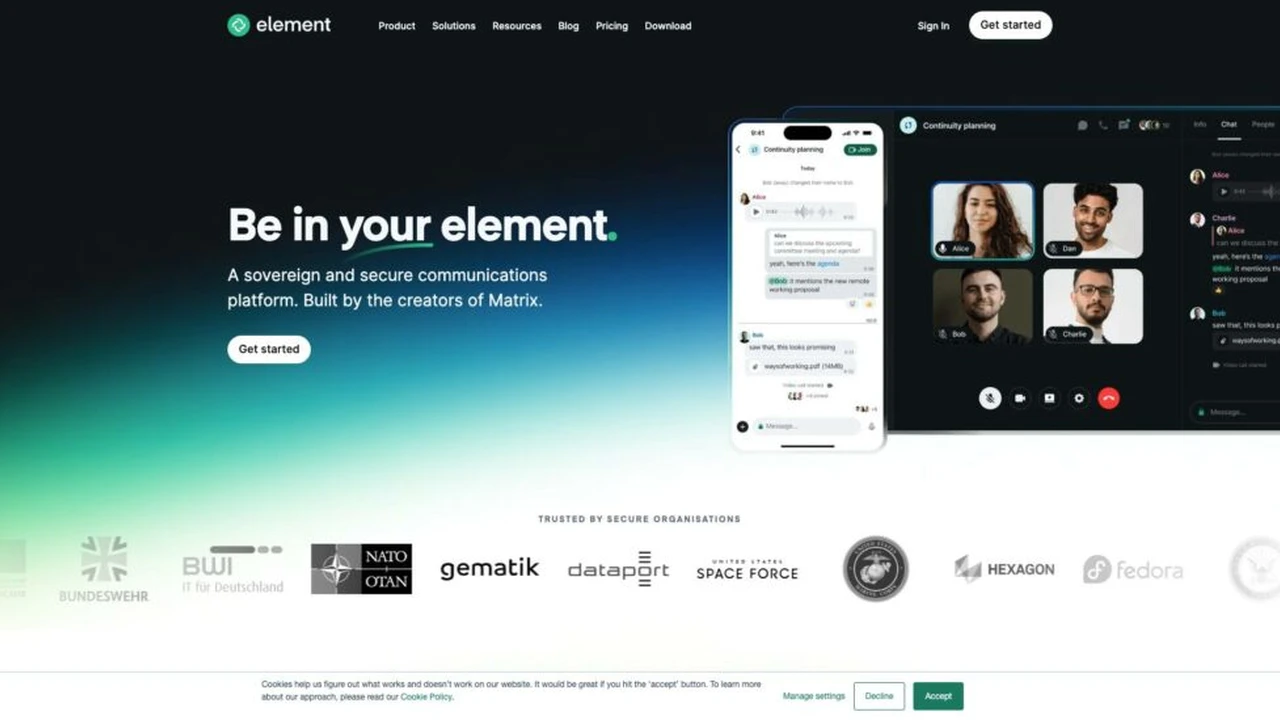
- Element (Matrix): (Free, open-source) Based on the open Matrix protocol, Element offers decentralized, end-to-end encrypted messaging. It's highly customizable and allows for self-hosting, giving users maximum control over their data. It's a bit more technical but offers unparalleled privacy.
How to use them: Download the app, register (often with just a username or a randomly generated ID), and start communicating. Encourage your friends and family to use them too, as encryption only works if both parties are using a secure app.
VPN Services for Enhanced Anonymity
A Virtual Private Network (VPN) encrypts your internet connection and routes it through a server in a location of your choice, masking your IP address and making it harder for third parties to track your online activity.
- NordVPN: (Subscription-based, starting around $3.49/month for a 2-year plan) Known for its strong encryption, vast server network, and strict no-logs policy. It offers features like Double VPN, Onion over VPN, and a kill switch. Great for general privacy and bypassing geo-restrictions.
- ExpressVPN: (Subscription-based, starting around $6.67/month for a 1-year plan) Offers excellent speeds, robust security features, and a user-friendly interface. It's a solid choice for streaming, torrenting, and everyday browsing. Also has a strict no-logs policy.
- ProtonVPN: (Free tier available, paid plans starting around $4.99/month) Developed by the creators of ProtonMail, ProtonVPN focuses heavily on security and privacy. It's based in Switzerland, known for strong privacy laws, and offers features like Secure Core servers and a kill switch. The free tier is a great way to try it out.
How to use them: Subscribe to a service, download their app on your devices (computer, phone, tablet), connect to a server, and your internet traffic will be encrypted and routed through that server. Always choose a reputable VPN provider with a clear no-logs policy.
The Future of Data Privacy More Rights on the Horizon
The trend is clear: data privacy is becoming a fundamental right globally. We're seeing more countries, especially in Southeast Asia and Latin America, developing and implementing their own comprehensive data protection laws. This means that as a consumer, your rights are only going to get stronger, and businesses will face increasing pressure to be transparent and responsible with your data.
Expect to see more focus on:
- AI and Data Privacy: As AI becomes more prevalent, how it uses and processes personal data will be a major area of regulation.
- Cross-Border Data Flows: The complexities of transferring data across different jurisdictions with varying privacy laws will continue to be a hot topic.
- Enforcement: Regulators are getting more teeth, and we'll likely see more significant fines and enforcement actions globally.
- Individual Empowerment: Tools and services that help individuals exercise their data rights will become more sophisticated and accessible.
So, stay informed, use the tools available to you, and keep advocating for stronger data privacy. Your digital life depends on it!
:max_bytes(150000):strip_icc()/277019-baked-pork-chops-with-cream-of-mushroom-soup-DDMFS-beauty-4x3-BG-7505-5762b731cf30447d9cbbbbbf387beafa.jpg)